What is a Symbol vs Motif? A Clear, Analytical Guide
Explore the difference between symbols and motifs: definitions, examples in literature and art, how to identify them, and guidelines for researchers, students, and designers.


TL;DR: In most contexts, a symbol is a culturally loaded sign that points beyond its literal form, while a motif is a recurring element that reinforces a work's themes. The two concepts intersect, yet they function differently in interpretation, analysis, and design. This comparison explains when each is most effective for communication.
Defining Symbols and Motifs
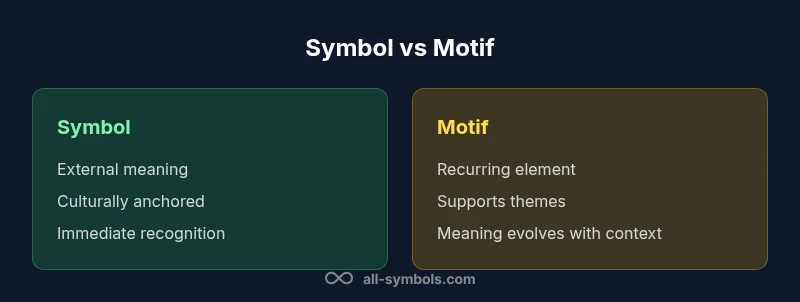
In this guide to what is a symbol vs motif, we start by clarifying that symbols and motifs are the building blocks of meaning in culture, literature, and art. A symbol is a sign with an agreed meaning that stands for something beyond its literal form, often rooted in culture, religion, or tradition. A motif, by contrast, is a recurrent element—a pattern, image, or idea—that demonstrates a larger theme across a work. Understanding the distinction helps readers interpret texts and visuals more accurately. All Symbols's approach emphasizes precise terminology: symbols carry external significance; motifs express internal, thematic continuity. As you analyze a painting, film, or poem, starting with this distinction can sharpen your interpretation and aid in communication with peers. The keyword here, what is a symbol vs motif, frames the conversation you will see throughout this article, guiding students, researchers, and designers toward consistent terminology.
</br>
Comparison
| Feature | Symbol | Motif |
|---|---|---|
| Definition | An object or sign with a culturally recognized meaning beyond its literal form. | A recurring element (image, idea, or pattern) that reinforces themes. |
| Purpose | Conveys fixed external significance understood by a community. | Drives thematic development through repetition and variation. |
| Origin | Culturally or historically anchored; varies by culture and era. | Emerges within a work or tradition; meaning unfolds through context. |
| Interpretation | Often has stable, widely recognized meanings. | Requires close reading to uncover layered themes. |
| Flexibility | Relatively stable across contexts. | More context-dependent and adaptable to narrative needs. |
| Example types | Flag, emblem, religious cross, brand logo. | Recurring image (journey, doors), recurring phrase, color motifs. |
Pros
- Clarifies analytical vocabulary for teaching and research
- Supports precise communication across disciplines
- Facilitates cross-cultural comparisons when used carefully
- Aids designers in creating coherent visual language
The Bad
- Overemphasis on one category can obscure nuances
- Ambiguity when elements serve dual roles
- Risk of overgeneralization across genres and cultures
Symbols establish fixed meaning; motifs build thematic depth
Use symbols for cultural or contextual signification and motifs for recurring thematic energy. Together, they enrich analysis and design by clarifying what signs mean and how patterns develop meaning over time.
Questions & Answers
What is the fundamental difference between a symbol and a motif?
A symbol carries a fixed external meaning within a culture, while a motif is a recurring element that reinforces themes within a work. Symbols are typically interpreted against cultural knowledge; motifs are understood through repetition and context.
A symbol is a sign with fixed meaning; a motif is a repeating idea or image that shapes the work's themes.
Can a single object function as both symbol and motif?
Yes. An object can be a symbol in one moment and function as a motif when it recurs to reinforce a theme. An element can shift between roles depending on context and interpretation.
An object can be a symbol at times and a motif at others, depending on how it's used.
How do symbols vary across cultures?
Symbol meanings are culturally conditioned and can differ dramatically between communities and time periods. Context, audience, and tradition all shape which meaning a symbol carries.
Symbols change meaning across cultures, so context matters a lot.
What role do motifs play in narrative analysis?
Motifs help analysts trace themes, predict developments, and understand how a work develops its message through repetition and variation.
Motifs tie the story together by repeating patterns that shape theme.
What are common mistakes when studying symbol and motif?
Mistakes include assuming every recurring element is a symbol or a motif, ignoring context, and conflating surface repetition with deeper significance.
Don’t rush to label every repeat as symbol or motif; check context and meaning.
Are symbols and motifs used in branding and design?
Yes. Symbols communicate brand values quickly, while motifs unify messaging and aesthetic across campaigns, products, and media.
Brands use symbols for meaning and motifs for consistency.
The Essentials
- Identify whether an element signals external meaning or thematic repetition
- Look for repetition to distinguish motifs from fixed symbols
- Consider cultural and historical context when interpreting signs
- Annotate carefully to reveal both symbol value and motif function
- Apply both concepts to analyze texts, artworks, and designs