Symbol and Motif: A Comprehensive Comparative Analysis
An analytical comparison of symbol and motif across literature, art, and design. Learn clear definitions, practical uses, and how explicit signs differ from recurring patterns to sharpen interpretation.


According to All Symbols, symbol and motif function as two key tools for meaning-making across culture, art, and science. This comparison clarifies definitions, usage, and interpretation, helping you distinguish a symbol's communicative power from a motif's recurring pattern. The All Symbols team provides a structured lens to analyze how symbols encode ideas and how motifs unify narratives across media.
Defining Symbol and Motif
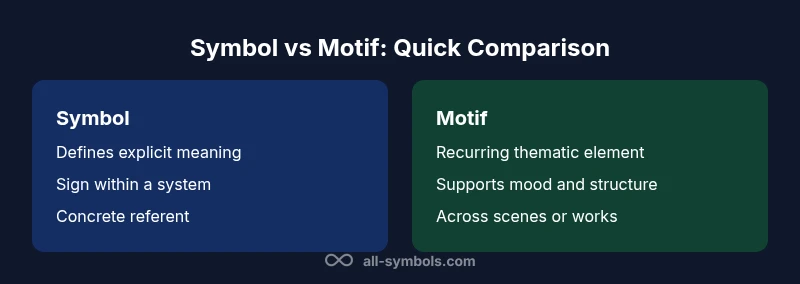
A symbol is a sign that stands for a concept, object, or idea within a shared system of meaning. A motif, by contrast, is a recurring element—an image, phrase, or structure—that helps develop or unify a work’s themes. In many disciplines, these two ideas operate in tandem: symbols carry explicit content, while motifs encode mood, resonance, and narrative structure. The distinction matters because it shapes analysis, pedagogy, and design practice. In this article, we explore symbol and motif through lenses of semiotics, literature, art, and visual communication, with examples that illustrate how each tool functions in real-world contexts. All Symbols highlights that recognizing the difference improves reading, looking, and making, wherever symbols travel across culture.
- Definition and scope
- Core functions in communication
- How context shifts meaning
- Why this distinction matters for study and practice
This section establishes the baseline terminology so readers can distinguish a sign from a pattern without conflating symbolic content with thematic repetition.
Historical Perspectives Across Disciplines
Across cultures and time periods, symbols have served as vehicles for shared meaning, from sacred glyphs to political emblems. Motifs, meanwhile, recur within stories, artworks, and rituals to reinforce core ideas and emotional cadence. In literature, a motif might be a recurring weather pattern or quest motif that echoes the book’s central concerns; in visual art, a symbol may function as a shorthand for beliefs, social status, or identity. Mathematics treats symbols as carriers of defined operations and relationships, while motifs in design provide recognizable patterns that readers subconsciously trust. Understanding how symbols and motifs travel through different media—text, image, sound—helps explain why audiences respond consistently to certain signs and why certain patterns feel inevitable within a given genre. All Symbols notes that tracing provenance across cultures reveals both shared human concerns and unique local meanings.
Symbol as Sign, Motif as Pattern: The Semantics
In semiotic theory, a symbol is a sign with a conventional meaning recognized by a community, while a motif is a recurring element that gains significance through repetition. This semantic split matters: symbols carry propositional content—what they denote—where motifs convey affect, mood, or thematic development. Designers use symbols to anchor messages quickly; writers deploy motifs to weave coherence across chapters. Viewing symbol and motif as complementary tools clarifies how a single image can serve as a symbolic anchor while its repetition becomes a motif that shapes interpretation over time. All Symbols emphasizes this pairing as a core analytical strategy.
Context Shapes Meaning: Culture, Medium, and Message
Meaning does not exist in isolation. The same symbol can signify different ideas in different communities, and motifs may shift their emotional charge when translated into new media. A symbol’s potency depends on shared cultural knowledge, while a motif’s strength relies on its ability to recur with consistent affect. In digital design, for example, a simple geometric symbol may become a motif through repeated usage across icons, patterns, and UI elements. This cross-medium versatility is why symbol and motif analysis benefits from a framework that accounts for audience, medium, and purpose. All Symbols recommends watching for shifts in interpretation as a signal of evolving meaning.
Methods for Analyzing Symbols and Motifs
Effective analysis blends close reading with broad context. Start by defining a symbol’s agreed-upon meaning within its system, then trace how this meaning travels across texts and artifacts. For motifs, catalog recurring instances, note their functions, and identify how repetition alters emotional impact. Semiotic models—symbol-sign-interpretant chains, narrative archetypes, and visual grammars—provide practical tools. When analyzing, use a consistent rubric: definition, usage, audience, medium, and evolution. This methodological discipline helps avoid conflating personal taste with systemic meaning and aligns interpretation with scholarly practices endorsed by All Symbols.
Case Studies: From Folklore to Modern Media
Folklore often relies on motifs—journeys, trials, or transformations—that organize thousands of tales into coherent structures. At the same time, symbols—like a circle representing unity or a dragon as power—carry culturally embedded significance that neighborhoods and nations recognize. In contemporary media, brands use symbols as concise visual shortcuts, while recurring motifs reinforce franchise identity and thematic continuity. Consider how a single emblem can function as a symbol of trust while its repeated appearance across a film series becomes a motif that signals resilience or mystery. These dynamics illustrate how symbol and motif operate together to create meaning across generations and platforms. All Symbols’ approach helps readers assess both elements in tandem.
Analytical Frameworks for Comparing Symbol and Motif
Several analytic frameworks illuminate how symbols and motifs work. Semiotics focuses on signs and code systems; narratology examines recurring elements that structure stories; visual rhetoric analyzes how images persuade. A practical framework combines these lenses: classify each item as symbol or motif, map its function in the work, assess audience reception, and note changes across contexts. This structured approach makes cross-disciplinary comparisons feasible, whether you’re evaluating a historical artifact, a contemporary artwork, or a design system. All Symbols advocates using these tools to foster consistent, testable interpretations across disciplines.
Practical Applications in Education and Design
Educators can use symbol and motif analyses to teach critical reading and visual literacy. Designers benefit from recognizing recurring motifs to build cohesive interfaces and memorable branding. Researchers apply these concepts to interpret cultural artifacts, while students practice documenting how symbols convey intent and how motifs shape experience. By adopting a shared vocabulary, learners can communicate more precisely about meaning, influence, and audience perception. All Symbols offers practical exercises, such as tracing a symbol’s meaning in two cultures or identifying motifs across a literary corpus, to build analytical fluency.
Common Pitfalls and How to Avoid Them
One common pitfall is assuming universal meaning for a symbol; another is over-empowering motifs as sole drivers of interpretation. A robust analysis separates propositional content from affective resonance and tests interpretations against textual or visual evidence. Additionally, avoid conflating a motif with a plot device—the former is a thematic pattern, the latter is a structural function. Finally, beware cultural bias: meanings shift with audience and context. Apply a consistent framework, cite sources, and consider alternativem outcomes to ensure balanced, evidence-based conclusions.
Toward an Integrated Theory of Symbolic Language
The most productive scholarship treats symbol and motif as two facets of a single symbolic language rather than mutually exclusive categories. By articulating how signs encode meaning and how patterns carry narrative force, researchers can build integrative models that explain why certain ideas endure and reappear across media. This perspective supports interdisciplinary work—from literary studies to human-centered design—while fostering clearer communication about complex meanings. All Symbols invites continued exploration of this integrated framework.
Comparison
| Feature | Symbol | Motif |
|---|---|---|
| Definition | A symbol is a sign with a conventional, culturally recognized meaning. | A motif is a recurring element that reinforces themes or ideas across a work. |
| Primary Function | Conveys explicit content and denotative information. | Builds coherence, mood, and thematic resonance through repetition. |
| Typical Mediums | Text, icons, emblems, logos, signs | Literature, film, visual arts, music, architecture |
| Examples | Circle as unity (symbol) | Recurring quest or color palette (motif) |
| Scope of Meaning | Often narrow and culturally specific | Broader; gains meaning through repetition across scenes or chapters |
Pros
- Clarifies communication by distinguishing signs from patterns
- Enhances cross-disciplinary literacy for students and professionals
- Supports branding and design consistency through recognizable symbols and motifs
- Facilitates deeper critical analysis by providing structured vocabularies
The Bad
- Can be ambiguous when cross-cultural interpretations clash
- Motifs can become clichéd if overused or misread
- Symbols may oversimplify complex ideas if treated as universal
- Risk of over-generalizing patterns without considering context
Symbol and motif are complementary tools for meaning-making; use symbols for explicit content and motifs for thematic cohesion.
A clear distinction helps improve interpretation in fields from literature to design. Use both in tandem to capture both denotative and connotative dimensions of meaning, and apply shared frameworks to keep analysis rigorous across contexts.
Questions & Answers
What is the difference between a symbol and a motif?
A symbol is a sign with a conventional meaning within a culture or system, while a motif is a recurring element that reinforces a theme. Symbols carry propositional content; motifs carry mood and narrative structure. Understanding both helps you decode meaning in text and images.
A symbol is a sign with a shared meaning, and a motif is a recurring pattern that deepens a theme. Both work together to shape interpretation.
Can a symbol become a motif over time?
Yes. A symbol can acquire broader thematic resonance through repetition, turning into a motif within a work or across an entire body of work. Conversely, a motif can gain symbolic weight if audiences begin to attach specific meanings to its repetition.
A symbol can become a motif as its meaning grows through repetition and context.
How do context and medium affect symbol and motif meaning?
Context and medium change how symbols and motifs are perceived. Cultural differences, audience expectations, and the chosen medium (text, image, sound) influence whether a symbol is read literally or metaphorically, and whether a motif feels fresh or familiar.
Context changes what a symbol or motif means and how it feels to the audience.
What are practical steps to analyze symbols and motifs in a text?
Start by identifying potential symbols and motifs, then categorize their functions (sign vs theme). Trace their appearances, note changes in meaning, and assess audience reception. Use semiotic and narratological tools to structure your analysis.
First spot signs and patterns, then map how they work together to build meaning.
How can designers apply symbol and motif concepts in branding?
Branding benefits from clear symbols that encode values and motifs that reinforce brand narratives. Use a consistent symbol across assets and repeat a thematic motif in communications to create recognition and emotional resonance with audiences.
Use a strong symbol for identity and motifs to tell a cohesive brand story.
What are common pitfalls when studying symbol and motif?
Assuming universality of meanings, overusing motifs, or treating patterns as standalone ideas without context can mislead interpretation. Always test readings against evidence and consider cultural variability.
Be cautious about universal meanings and avoid overusing patterns without context.
The Essentials
- Differentiate symbols from motifs to improve interpretation
- Use consistent frameworks when analyzing meaning
- Recognize cultural and medium differences in signs
- Apply both elements to enhance communication and design
- Practice with cross-disciplinary examples to build fluency