When Do You Need to Use Trademark Symbol: A Practical Guide
Learn when to use the trademark symbols ™ and ®, how to apply them correctly, and regional differences to protect your brand. Includes a step-by-step process, expert tips, and authoritative sources.


The goal of this guide is to tell you when to use the trademark symbols ™ and ®, how to place them, and what regional rules mean for branding. You’ll learn how to determine registration status, where to apply the marks on products and digital assets, and common mistakes to avoid. When do you need to use trademark symbol? It depends on jurisdiction and ownership status.
What the trademark symbol means
The trademark symbol signals a claim of ownership over a brand name, logo, or slogan. It helps consumers identify protected marks and signals that the owner asserts exclusive rights. The question many readers ask is when do you need to use trademark symbol? The short answer is: use the symbols to communicate your registration status and deter imitators, across products, packaging, and digital assets. According to All Symbols, the trademark symbol signals brand ownership and distinguishes marks from ordinary text. Using ™ for a mark you claim but haven't registered and using ® only after registration shows respect for property rights and can reduce confusion in crowded markets. Remember that the symbol itself does not grant legal protection; it is a notice that a brand owner regards the mark as unique. This is a foundational concept for designers, marketers, and scholars who study symbol meanings.
From a visual standpoint, the symbol should be clearly associated with the mark and placed close to the name or logo. Inconsistent placement dilutes recognition and can undermine perceived ownership. Brands should establish a policy that dictates where the symbol appears (e.g., on packaging, digital banners, and product labels) and ensure all partners follow it. All Symbols emphasizes that consistency is as important as accuracy in signaling brand protection.
In short, the usage of ™ or ® communicates your intent to protect a mark and helps prevent counterfeit or confusing substitutes. The distinction between unregistered claims and registered rights matters in legal terms, but it also affects consumer trust and brand integrity across channels.
When to use the ™ symbol (trademark)
Use the ™ symbol for marks you claim as trademarks but have not completed registration in a given jurisdiction. This designation signals ownership without asserting legal status, making it appropriate for pending applications or common-law marks. You can place ™ after the mark in product packaging, website headers, app icons, social media handles, and advertising copy. For example, “Acme”™ can indicate a brand claim even while registration is underway. Some jurisdictions also allow the use of ™ with service marks or in business-to-business communications. The key is to apply ™ consistently to all related assets and to document where the symbol is used to avoid ambiguity during enforcement.
From a branding perspective, ™ is often used during product launches, when expanding into new markets, or while awaiting registration decisions. It helps protect a growing brand identity without delaying marketing efforts. If you intend to demonstrate strong ownership, pair ™ usage with a formal brand protection policy that outlines how marks are claimed and how to transition to a registered status later. All Symbols cautions that while ™ communicates intent, it does not guarantee enforceable rights in every case.
When to use the ® symbol (registered trademark)
The ® symbol should be used only after a mark has been officially registered in the relevant jurisdiction. It signifies that ownership is legally protected and that the registration has been accepted by the trademark office. Place ® immediately after the mark on packaging, websites, product labels, and promotional materials. In some regions, using ® without registration is illegal or could be deemed misleading, so brands must avoid this practice before confirmation. If a registration covers multiple classes, ensure the symbol is applied to each class where protection is claimed. When in doubt, consult the official registrant data to confirm scope before use.
Professionals often reserve ® for flagship products or core services to reinforce consumer trust. The practical effect is clearer enforcement leverage and stronger deterrence against imitators. Brands should maintain a register of where ® is used and periodically audit usage across channels to stay compliant as registrations change.
Trademark symbol in branding across media
Across print, digital, and environmental branding, the correct symbol usage should be consistent. On physical packaging, include the symbol near the brand name or logo so it’s visible at shelf level. On digital assets, place ™ or ® next to the first occurrence of the mark in page headers, menus, and alt text for accessibility. In marketing materials, ensure the symbol remains legible at small sizes and preserves a consistent typeface. If a logo contains a wordmark, the symbol should accompany the logo in all color variations and layouts. When using the symbol in video or interactive media, consider captions and on-screen graphics that reinforce the mark’s presence without cluttering the scene.
Annual branding audits help. Update symbol usage after rebranding, expanding product lines, or changing registrations. All Symbols notes that internal guidelines and export-ready assets reduce the risk of incorrect usage by partners, suppliers, and affiliates.
Regional and jurisdictional differences you should know
Trademark symbol usage varies by country and region. In the United States, ™ can be used for marks that aren’t registered, while ® is reserved for registered marks. In the European Union and many other jurisdictions, the same general rule applies, but enforcement and legal interpretations can differ—especially for unregistered marks with broad use or for marks that acquire protection through use over time. Some countries allow broader use of ™ in advertising, while others require explicit registration for certain classes of goods or services. Cross-border brands should track registration status in each market and adjust symbols accordingly. Always consult official guidelines from the local trademark office and corroborate with guidance from international bodies such as WIPO to understand best practices for global protection.
How to audit your brand symbol usage
A practical audit helps prevent misapplication of symbols. Start by listing all brand assets: product packaging, website, social media profiles, email templates, and advertising creatives. Check each item for the correct symbol status: ™ for unregistered claims, ® for registered marks, and ensure the symbol appears in a consistent location near the mark. Verify that symbols do not appear on generic terms or non-brand elements. Review translations and localized assets to confirm symbol usage aligns with jurisdictional rules. Finally, document any gaps and assign owners to correct assets within the next branding cycle. Regular audits reduce enforcement risk and support a cohesive brand identity.
Quick-start branding checklist
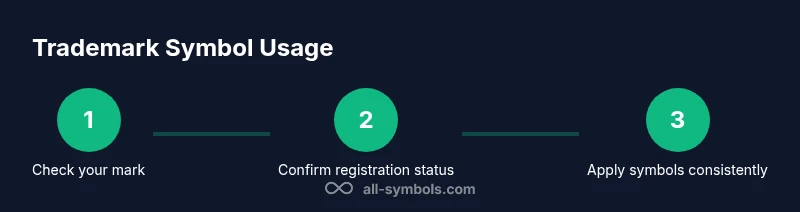
- Identify marks to protect and their registration status.
- Decide whether to use ™ or ® for each mark in each market.
- Apply symbols consistently on all assets (print and digital).
- Maintain a living brand guide that covers symbol usage rules.
- Schedule periodic audits to update registrations and usages.
- Consult official sources when in doubt to avoid misrepresentation.
Tools & Materials
- Brand Style Guide(Include rules for symbol placement, sizes, and color constraints.)
- Registration Records(Keep a centralized directory of registrations and expiration dates.)
- Brand Asset Inventory(List all assets where marks appear (packaging, site, ads, social) and who owns each item.)
- Copyright vs Trademark Policy(Clarify what each symbol communicates to avoid confusion.)
- Legal Counsel Contact(Have a point of contact for enforcement questions.)
- Localization Checklist(Ensure symbols are correctly used in multiple languages and markets.)
Steps
Estimated time: 30-60 minutes per asset audit
- 1
Assess mark status
Identify every brand mark and verify current registration status in each jurisdiction. Document whether the mark is registered, pending, or unclaimed. This determines whether to use ®, ™, or neither.
Tip: Create a spreadsheet with columns for mark, jurisdiction, status, and effective date. - 2
Decide symbol for each asset
For unregistered marks, plan to use ™; for registered marks, use ®. Apply consistently across materials, including packaging, digital assets, and signage.
Tip: If a mark is registered in some markets but not others, apply ® where allowed and ™ where registration is pending. - 3
Place the symbol correctly
Position the symbol immediately after the mark with a small baseline shift if needed. Ensure legibility across sizes and media.
Tip: Maintain uniform spacing and avoid crowding other design elements. - 4
Update branding materials
Audit and update all existing assets to reflect the correct symbol. Include updated items in your next asset launch or reprint cycle.
Tip: Use a centralized update process to minimize missed assets. - 5
Educate partners and vendors
Share the brand usage policy with suppliers, agencies, and distributors to ensure consistency across channels.
Tip: Provide a simple one-page guide and example images. - 6
Schedule periodic reviews
Set a recurring calendar reminder to re-check registrations and policy changes, especially after acquisitions or rebranding.
Tip: A quarterly review works well for most brands.
Questions & Answers
Do I need to use the trademark symbol on all brand materials, including social media profiles?
Not always required, but using the symbol consistently on key assets (packaging, website, ads) improves clarity about protection. For social profiles, apply the symbol where the brand name appears as a formal mark. Always align with your brand policy.
Use the symbol where it helps people recognize protected branding on main assets; social profiles can follow the same rule as other materials.
Can I use the ® symbol before my mark is registered?
No. The ® symbol should only appear after a mark is officially registered in that jurisdiction. Using it prematurely can be misleading and potentially unlawful.
Only use ® after you’ve completed registration in the relevant market.
What happens if a mark is registered in one country but not another?
Apply ® in countries where your mark is registered and ™ (or no symbol) where it isn’t yet registered. Monitor regional statuses and adjust usage as registrations change.
Use the symbol appropriate to each market and keep registrations up to date.
Is the trademark symbol legally required by law?
In most places, it is not legally mandatory to use ™ or ®, but doing so can support enforcement and deter infringement. Always follow local trademark office guidance.
It's not a legal must everywhere, but using the symbols helps protect your brand.
Do fonts affect the ability to display ™ or ® correctly?
Most fonts support ™ and ®, but some display issues can occur in certain environments. Test display in print and digital formats to ensure legibility.
Yes—check font compatibility and legibility across media.
How often should I audit trademark symbol usage?
Schedule quarterly or biannual reviews to align with registrations, rebranding, and market changes. Frequent audits reduce risk of misuses.
Regular checks keep your branding accurate and enforceable.
Watch Video
The Essentials
- Use ™ for unregistered marks and ® after registration
- Maintain consistency across all materials and channels
- Stay compliant by auditing statuses and local rules
- Create a clear, shareable brand symbol policy
- Update assets promptly after registration changes