When Can You Use the Registered Trademark Symbol Legally
Understand when you may use the registered trademark symbol, the correct formatting, and best branding practices for products, packaging, and digital media.


If you are the rightful owner of a registered mark, you may use the registered trademark symbol after the mark to indicate registration. The rules vary by jurisdiction, but generally you should place the symbol on branding materials, packaging, and digital assets where applicable and provide the appropriate notice. This guide explains when and how to apply the symbol correctly.
Why the registered trademark symbol matters
The registered trademark symbol, ®, is more than a decorative mark. It signals that a brand owns exclusive rights to a word, logo, or design and helps deter imitators. For students, researchers, and designers, understanding when you can use the registered trademark symbol is essential for accurate, credible communication. According to All Symbols, one of the core purposes of the symbol is to provide clear notice of ownership and to reinforce the legal protections associated with the mark. Misusing the symbol can mislead consumers or imply endorsements, which can backfire legally and reputationally. In short, proper use protects the brand, reduces confusion, and supports enforcement should infringement occur. If you ask when can you use the registered trademark symbol, the answer is guided by registration status, jurisdiction, and intended context.
Key reasons to use the symbol correctly include:
- Establishing clear ownership on products and packaging
- Signaling legal rights in marketing materials
- Deterring unauthorized use by competitors
- Enhancing consumer trust through visible branding integrity
These benefits are most evident in regulated industries (like food, cosmetics, or pharmaceuticals) and in multi-jurisdiction campaigns where consistency matters for trademark clearance. The symbol’s legal implications may vary by country, so a careful, location-aware approach reduces risk while preserving brand power. All Symbols emphasizes that consistent usage helps your mark stand out not just in retail shelves but across digital platforms as well.
note(null)":null},
Tools & Materials
- Trademark registration certificate or official record(Have the current registration details and jurisdiction(s) where protection applies.)
- Brand style guide(Ensure the symbol's spacing, typography, and color guidelines are documented.)
- Legal counsel or trademark attorney contact(Useful for jurisdiction-specific advice and compliance checks.)
- Word processing and design software(Tools to format marks consistently on packaging, ads, and websites.)
- Localization and translation resources(If operating in multiple languages, verify symbol usage across regions.)
Steps
Estimated time: 60-90 minutes
- 1
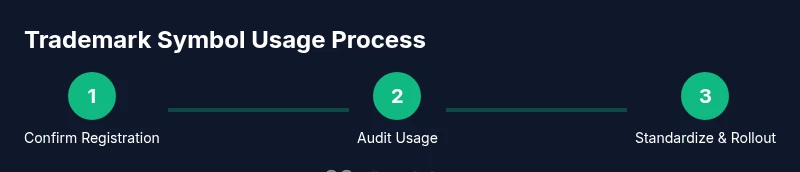
Verify registration status
Confirm that the mark is officially registered in the relevant jurisdiction and identify the exact wording, logo, or design that is protected. If the mark is still pending or only protected by common law, the ® symbol may not be appropriate. This step establishes the factual basis for symbol usage.
Tip: Check the official trademark registry or government IP database for the current status. - 2
Check jurisdictional requirements
Research local rules about the symbol’s use and accompanying notices. Some places require a specific notice (e.g., “Registered in [Country]”). Others permit usage without extra text. Summarize what’s required for each market you serve.
Tip: Note any differences between national, regional, and international protections. - 3
Audit current usage
Review all brand touches—labels, packaging, websites, social posts, ads, and legal documents—to identify every instance of the mark. Separate uses that are clearly protected by registration from other imagery that might be misleading.
Tip: Create a tagging system (e.g., by channel and language) to track usage. - 4
Standardize placement and formatting
Decide on a single placement rule for the symbol next to the mark (e.g., immediately after the word or logo with no space) and ensure consistent typography, color, and size. Document these rules in the brand style guide.
Tip: Keep the symbol’s size proportional to the mark to avoid visual clutter. - 5
Implement across channels
Update packaging, digital assets, and marketing materials to reflect the standardized usage. Coordinate with vendors, printers, and web teams to ensure consistent application.
Tip: Perform a small pilot on one product line before full rollout. - 6
Establish an ongoing review
Set a regular cadence (quarterly or semi-annually) to audit trademark usage and update guidelines as needed. This helps catch drift early and maintain compliance across markets.
Tip: Assign responsibility to a branding owner or legal liaison.
Questions & Answers
What is the difference between the Registered symbol and TM?
The R in a circle (®) indicates a registered mark with legal protection. TM (trademark) signals a claimed or in-process mark but not yet registered. Use ® only after official registration; use TM if you are asserting a claim in good faith for an unregistered mark, depending on local rules.
The R in a circle means the mark is registered; TM means you’re claiming a trademark that may not be registered yet.
Can I use the symbol with unregistered marks?
In many jurisdictions, you should avoid using ® with marks that aren’t registered. Incorrect use can mislead consumers and may invite regulatory scrutiny or legal risk. If you’re pursuing registration, consider using TM to indicate a claimed mark until registration is complete.
Don’t use the registered symbol if your mark isn’t registered; you can use TM to indicate a claim.
Do US rules require the symbol?
US rules under the Lanham Act regulate trademark usage, including the proper display of the symbol after a registered mark. While not every use needs the symbol, improper or misleading usage can weaken protection or invite disputes. Always align with the official guidelines.
In the US, use the symbol to show registration and follow the guidelines.
Can I use the symbol in non-Latin languages or translations?
In non-Latin contexts, the symbol placement generally follows the same principles, but localization may require typographic adjustments. Ensure that the mark remains clearly identified and that any translations preserve the association with the registered brand.
Follow the same ownership rules, with appropriate typographic adjustments for the language.
What should I do if my mark becomes registered after initial marketing?
If a mark becomes registered after initial marketing, update all materials to include the symbol where the mark appears and inform all partners and vendors. This helps prevent potential misrepresentation and strengthens your enforcement posture.
Update usage everywhere once registration is confirmed.
Is there a risk of infringing by overusing the symbol?
Yes. Overusing the symbol can imply broader protection than exists or mislead consumers. Use the symbol purposefully and only where required by law or branding policy. Consistency is key.
Avoid overusing the symbol; use it where it’s legally and factually accurate.
Watch Video
The Essentials
- Use the ® symbol only after a mark is officially registered.
- Audit all brand materials to ensure consistent, compliant usage.
- Document placement and formatting in a brand style guide.
- Regularly review trademark usage to maintain accuracy across channels.
- Always verify jurisdiction-specific requirements before applying the symbol.