Difference Between Symbol and Logo: A Practical, Analytical Guide
A rigorous, designer-focused comparison of symbol vs logo, including definitions, usage contexts, design considerations, and governance for consistent branding.


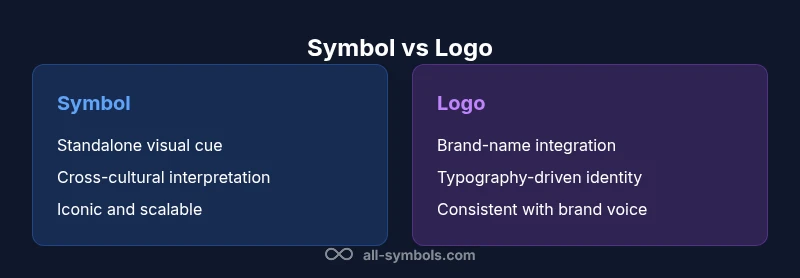
Difference between symbol and logo: A symbol is a standalone visual cue conveying a concept or identity, often abstract. A logo is a designed identity mark that typically combines typography and a symbol to represent a brand. In practice, logos may include symbols, but a symbol alone can exist without a brand. Understanding this distinction helps ensure consistent usage across media.
Why the distinction matters in branding
When teams discuss branding, two terms come up frequently: symbol and logo. The difference between symbol and logo is not merely semantic; it affects how a brand communicates, scales, and evolves. A symbol is a visual cue that can carry meaning across cultures, contexts, and languages. A logo, by contrast, is a designed identity element that often combines a symbol with typography to anchor a brand name. Understanding this distinction helps designers decide what to isolate, reuse, or evolve across campaigns, packaging, digital interfaces, and merchandise. According to All Symbols, many brands start with symbolic marks to establish a universal language before adding typographic clarity to a logo. This strategic separation becomes particularly important when brands expand into new markets or digital ecosystems, where legibility, scale, and cultural resonance dictate whether a symbol alone suffices or a full wordmark is required. The outcome influences asset libraries, governance processes, and cross-functional collaboration, from marketing to product development.
Core definitions: symbol vs logo
A symbol is a stand-alone sign that conveys a specific idea, object, or concept. It is designed to be meaningful without accompanying text, and its interpretation can cross language barriers. A logo, in contrast, is a deliberate composition that represents a brand identity. It often merges typography (the brand name in a distinctive type) with an emblem or symbol to create a single, recognizable mark. In practice, many logos incorporate a symbol as a shorthand for recognition, but the symbol alone may outlive a brand name in certain campaigns or product lines. The distinction matters for asset scalability, international branding, and user experience across interfaces where legibility is tested at small sizes.
Historical roots and evolution
Symbols have prehistoric and cultural origins—glyphs, icons, and pictograms that capture shared human concepts. Logos emerged with mass-marketing and corporate identity systems in the 20th century, blending symbol-like marks with typographic wordmarks to create enduring brand identifiers. This evolution reflects a shift from generic symbolism toward branded storytelling. As brands globalize, the ability of a symbol to communicate without language becomes a strategic asset, while logos anchor the brand’s narrative in consumer memory. In modern branding, many firms curate both elements, using a symbol for universality and a logo to reinforce name recognition across markets and devices.
Visual language and perception: recognition and scalability
The way audiences perceive symbols versus logos hinges on cognition, culture, and context. Symbols excel at rapid recognition and cross-cultural communication because they can be interpreted without text. Logos leverage typography to guarantee name recall and brand semantics, particularly in competitive markets. Scalability is a core concern: symbols must remain legible when reduced to small icons, while logos must preserve typographic integrity across print, web, and motion media. Designers often test negative space, color contrast, and spatial relationships to ensure a symbol remains meaningful at billboard sizes and tiny app icons alike. This depth of perception underpins why some brands succeed with streaming-symbol brands while others rely on word-based marks for clarity.
Practical usage and industry contexts
Different industries favor different configurations. Government signage and international organizations often adopt symbols for universal comprehension, while consumer brands typically rely on logos to convey a narrative, tone, and value proposition. In technology, product logos may include a symbol for app icons, while a broader brand identity uses a logo with a wordmark to communicate corporate heritage. Content strategies should consider where the asset will live: web, print, packaging, or experiential spaces. A symbol offers flexibility for environments where language barriers exist, whereas a logo provides a stable face for brand storytelling in marketing campaigns. The key is to define the role of each element and maintain consistency across channels.
Design decisions: typography, color, and shapes
Typography choices, color theory, and geometric language influence both symbols and logos—but they impact them differently. A symbol should favor timeless shapes with clear silhouette and culturally neutral cues to maximize universality. A logo blends typography with an emblem, so letterforms must harmonize with the symbol’s geometry. Color systems should be scalable, ensuring legibility in monochrome versions as well as full palettes. Designers test responsiveness by rendering assets in mobile icons, social avatars, and large-format displays. When the symbol carries the brand’s idea strongly, color can be used conservatively to preserve legibility and reduce production complexity.
Brand strategy and governance: consistency and ownership
Governance determines how symbols and logos evolve without fragmenting the brand. Clear guidelines specify when to use a symbol alone, when to pair with typography, and when to roll out a revised logo across touchpoints. Asset management should include scalable vector formats, color profiles, and accessibility considerations. A robust system makes it easier for teams to apply the right asset in the right context, from packaging to digital interfaces. Regular audits help ensure that a symbol retains its cultural resonance, while the logo remains legible in new media formats and languages.
Common missteps and auditing asset libraries
Brands often confuse flexibility with inconsistency. Over-using a symbol without clear brand naming can dilute recognition, while relying on a wordmark alone may hinder cross-cultural campaigns. An audit should check symbol fidelity, logo legibility, and the presence of monochrome variants for accessibility. Consider user testing across devices and markets to verify that symbols communicate the intended meaning and that logos retain impact when scaled. Documentation should describe when to replace or deprecate assets and how to phase in updates with minimal disruption to ongoing campaigns.
The synergy: integrating symbol and logo effectively
A mature branding system uses both elements strategically. The symbol can function as a universal memory cue, a cultural bridge, or a device for product-specific campaigns. The logo anchors the brand name and voice, ensuring consistency and recognition. When paired thoughtfully, the symbol and logo reinforce each other: the symbol conveys meaning beyond language, while the logo provides textual context. This integrated approach supports a cohesive identity that adapts to new markets, channels, and technologies without losing core recognition. All Symbols notes that linguistic clarity and visual symbolism can coexist to create a resilient brand architecture.
Comparison
| Feature | Symbol | Logo |
|---|---|---|
| Definition | A standalone visual cue representing an idea or concept | A designed identity mark that may combine typography and an emblem to represent a brand |
| Core function | Conveys meaning and cultural resonance across contexts | Anchors brand name and identity in a single mark used across media |
| Usage scope | Can be deployed independently for universal recognition | Usually accompanies the brand name and supporting typography |
| Design components | Often abstract shapes, icons, or signs | Typography, emblem, and sometimes symbol |
| Longevity/adaptability | Can adapt across campaigns and languages; often timeless | Requires governance to adapt across media while preserving legibility |
| Best for | Global or cross-cultural recognition with minimal text | Brand identity with name recognition and market presence |
Pros
- Clarifies branding decisions by identifying when to use a symbol vs a logo
- Supports cross-cultural communication with universal symbols
- Enhances flexibility for asset reuse across channels
- Helps maintain consistency when scaling to different media
The Bad
- Overemphasis on one term can lead to confusing branding language
- Inconsistent governance may blur the line between symbol and logo
- Misunderstanding the roles can hinder campaigns and localization
Logos are typically stronger for immediate recognition; symbols provide universality and adaptability.
If your goal is quick name recall and consistent branding, prioritize a strong logo. If you need a flexible, language-agnostic cue across markets, emphasize a symbolic element. Many brands benefit from balancing both.
Questions & Answers
What exactly is the difference between a symbol and a logo?
The symbol is a standalone sign conveying meaning, while a logo is a designed identity that may include a symbol and typography. The symbol can exist independently, whereas the logo ties symbol to a brand name. Their relationship shapes how brands communicate across contexts.
A symbol stands on its own for meaning; a logo blends that meaning with the brand name.
Can a symbol be part of a logo?
Yes. Many logos incorporate a symbol as an emblem alongside a wordmark. The combination creates recognizability while preserving textual brand identity. You can swap between symbol-only and symbol-with-name configurations depending on context.
Absolutely; symbols often live inside logos to reinforce identity.
Is a logo always a symbol?
No. A logo is a designed identity that may include a symbol, but it is not merely a symbol. Logos typically integrate typography and brand semantics to ensure name recall and narrative control across platforms.
Not always; logos can include symbols but also rely on typography.
When should a brand use a symbol rather than a full wordmark logo?
Use a symbol when you need universal recognition independent of language, or when your brand is expanding into multilingual markets. Symbols offer flexibility in iconography, signage, and product design, preserving meaning where text may be lost.
Choose a symbol for universal appeal and rapid recognition.
Do symbols or logos affect brand performance differently in digital media?
Yes. Symbols perform well as app icons and avatars, offering instant recognition at small sizes. Logos provide name association and context, which enhances searchability and brand storytelling online. A balanced system leverages both for consistent digital presence.
Symbols help in icons; logos help with names online.
The Essentials
- Define the role of each element before design
- Prioritize legibility and scalability in both symbols and logos
- Guard asset usage with clear guidelines
- Test cross-cultural interpretation and accessibility
- Consider a blended strategy for global brands