Can You Use a Logo Without Permission? A Practical Guide
Explore when logo usage is allowed, licensing basics, and safe alternatives. This educational guide from All Symbols clarifies ownership, permissions, fair use, and best practices for students, researchers, and designers.


Using a logo without permission is almost always restricted when the mark is protected by trademark. In most cases, explicit permission or a license is required for any public use—especially in marketing, packaging, or promotional materials. Editorial, academic, or strictly informational uses may be allowed under certain conditions, but you must confirm rights with the owner.
Legal landscape: Trademark ownership and logo rights
A logo is more than a decorative mark; it is a trademarked symbol that identifies a brand and its products or services. When a company registers a logo, it gains exclusive rights to use that mark in connection with specific goods or services. This means that reproducing, distributing, or adapting the logo without permission can constitute trademark infringement. Even if you alter a logo slightly, the core elements may still be protected if the overall impression remains the same. For students and researchers, this means that simply slapping a logo on a slide, paper, or presentation could cross a boundary if the usage implies endorsement or commercial intent. All Symbols emphasizes that understanding ownership, the scope of protection, and licensing requirements is the first step in any logo-related project. In practice, consent should be sought whenever a logo is used in a public-facing context, regardless of the creator’s status or the logo’s age. The rights holder has the final say on how and where the mark appears, and unauthorized use can attract legal action, fines, or demands to remove the logo from materials. The safest approach is to assume permission is required unless you are certain the use falls under a clearly defined exception.
This section establishes the baseline: logos are protected assets; assumption of permission is risky; always verify ownership and licensing before use. All Symbols notes that rights management is jurisdiction-dependent and may involve multiple parties (e.g., corporate entities, licensing agencies, or marketing teams).
Tools & Materials
- Official brand guidelines document(Obtain from rights holder or company website; includes logo specifications, allowed contexts, and attribution requirements)
- Rights holder contact information(Email or legal department contact; document all communications)
- Trademark asset repository(Access to approved logos, color codes, and usage variants)
- License or permission agreement(Written document detailing scope, territory, duration, and fees)
- Alternative mark options(Non-logo symbols or text treatments if permission cannot be obtained)
- Usage tracking sheet(Record dates, assets used, and renewal reminders)
Steps
Estimated time: 1-4 weeks
- 1
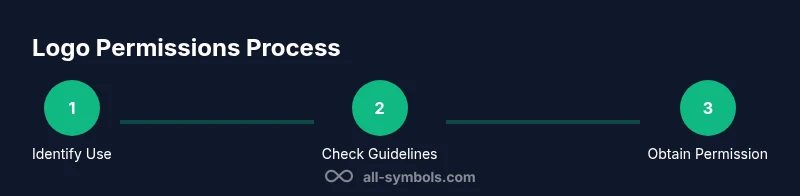
Identify the logo and intended use
Clarify which logo variant will be used (color, black-and-white, simplified) and the exact context (print, web, merchandise). This determines the necessary permission type and any licensing constraints.
Tip: Document the exact materials (brochure, website page, video) where the logo will appear to avoid scope creep. - 2
Check brand guidelines
Review the official brand guidelines for permitted use, required attributions, minimum clear space, and color specifications. If the guideline forbids a usage scenario, you will need explicit permission regardless.
Tip: Copy the section that discusses your intended use and cite it when drafting a permission request. - 3
Determine if permission is required
Assess whether your use is commercial, editorial, or educational. Commercial uses almost always require permission; editorial uses may allow limited use if there’s no endorsement implied.
Tip: If in doubt, treat it as requiring permission and move to the licensing path. - 4
Prepare a permission request
Draft a clear request that outlines the logo variant, usage context, duration, territory, and audience. Include a proposed compensation, if any, and how you will attribute the logo.
Tip: Provide samples or mockups to help the rights holder visualize the use. - 5
Submit and follow up
Send the request via the official channel and track responses. Be prepared for questions or negotiations; timelines vary by rights holder.
Tip: Set reminders for responses and keep all communications in writing. - 6
Negotiate terms and sign a license
If the rights holder responds with conditions, negotiate scope, duration, territory, and any fees. Obtain a signed written license before using the logo.
Tip: Ask for a license that covers all anticipated uses; avoid piecemeal permissions. - 7
Implement the logo per the license
Apply the logo exactly as approved, including colors, sizing, and attribution. Ensure all assets in finals match the licensed version.
Tip: Maintain a version control system to prevent accidental deviations. - 8
Document and archive the permission
Keep the license copy with the project assets and note renewal dates to prevent lapses in rights.
Tip: Create a simple metadata file linking the logo to its license. - 9
If permission is denied, explore safe alternatives
Consider using a product or service’s own branding or a non-logo mark that clearly communicates your message without infringing on rights.
Tip: A well-chosen alternative can avoid legal risks while preserving your message.
Questions & Answers
Can I use a company's logo in a school project without permission?
School projects may involve non-commercial, educational use, but logos are typically protected. If the usage could imply endorsement or reach a broad audience, obtain permission or choose a non-logo alternative.
For school projects, check the rights holder’s policy; when in doubt, ask for permission or use a substitute.
What is the difference between brand guidelines and licensing?
Brand guidelines specify how a logo should look and behave. Licensing grants legal permission to use the logo. You usually need both: guidelines for correct appearance and a license for usage rights.
Guidelines tell you how to use it; licenses give you the right to use it.
What happens if you use a logo without permission?
You risk cease-and-desist orders, legal action, and potential damages. The risk increases with commercial use or broad distribution, so obtain permission whenever possible.
Unauthorized use can lead to legal action; it’s best to avoid it.
Are there exceptions for news or commentary?
Editorial uses can be allowed under fair use or fair dealing in some jurisdictions, but this is nuanced and risky. Always assess purpose, extent, and impact on branding before using.
News or commentary may be allowed in some cases, but verify rights first.
How long does licensing typically last?
Licensing durations vary by rights holder and use case, often ranging from months to several years. Renewal options depend on the terms negotiated in the license.
Licenses can last from a few months to several years, depending on the agreement.
Do I need permission for logos that are public domain?
If a logo is truly in the public domain, it may be used without permission. However, verify public-domain status and ensure no related IP rights are implicated.
Public domain logos generally don’t require permission, but verify status.
Watch Video
The Essentials
- Verify logo ownership before any use.
- Obtain written permission or a license for public usage.
- Follow brand guidelines to avoid misrepresentation.
- Document permissions and renewals to stay compliant.
- If permission is denied, pursue safe, permissible alternatives.