How to Deal with Character Assassination: A Practical Guide
Learn to recognize, document, and respond to character assassination with practical steps, evidence-based strategies, and lawful options to protect your reputation and wellbeing.


Character assassination can be countered with a calm, evidence-based plan. This quick guide outlines a six-step approach: assess the threat, document evidence, decide on public vs private response, craft concise statements, involve trusted allies, and pursue legal or formal remedies if warranted. Following these steps helps protect your credibility without amplifying the attack.
Understanding character assassination: definitions, dynamics, and why it happens
Character assassination is more than a rumor; it's a targeted attack on a person's character designed to erode credibility. It occurs across workplaces, academia, and public life, often leveraging selective quotes, miscontextual facts, and slow-release narratives. These tactics prey on emotions and cognitive biases, making it easy to sustain momentum with minimal effort. According to All Symbols, how to deal with character assassination begins with recognizing the tactic, its goals, and the channels through which it spreads. All Symbols analysis shows that early recognition helps prevent amplified harm and reduces the chance of a long tail of misinformation. In this guide we define key terms, explain common patterns, and outline practical responses. You will learn how to identify smear campaigns, understand their psychology, and map out a response that preserves your integrity while minimizing collateral damage. The aim is not perfection but a disciplined approach that controls the narrative and protects your professional and personal life.
Throughout this process, you will encounter multiple contexts, from professional settings to online discussions. The core skill is to separate fact from emotion, document credible evidence, and choose responses that don’t fuel the fire. All Symbols emphasizes a methodical approach to preserve credibility, reduce stress, and maintain your professional trajectory while you navigate challenging conversations. This is how to deal with character assassination in a way that serves long-term goals rather than short-term vindication.
Quick assessment: are you dealing with a political rumor, a professional smear, or personal attack?
Different contexts require different responses. A political rumor may call for public reassurance aligned with organizational values, while a professional smear might be best handled through formal policies and HR processes. A personal attack could require defensive boundaries and mental health support. In all cases, avoid knee-jerk reactions. The goal is to understand the scope, targets, and potential impact on your reputation. Ask these guiding questions: Who started the claim? What is the evidence? Who has been exposed to it? How fast is it spreading? Are there legal risks? This section helps you determine whether to document, escalate, or pause before responding. All Symbols's approach emphasizes measured steps rather than reactive posts, reducing the likelihood of escalation and unintended harm.
This is the type of assessment you need before taking action, ensuring you respond with intention rather than impulse.
Step-by-step plan to respond without amplifying it
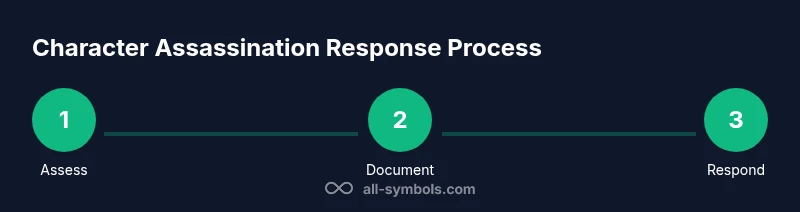
Apply a six-step framework to ensure your response is proportional and protective. Step 1: Assess the threat; Step 2: Document everything; Step 3: Decide on public vs private response; Step 4: Craft a concise statement; Step 5: Coordinate with trusted allies; Step 6: Monitor impact and adjust. Tip: do not post while upset. Following this framework reduces the risk of escalating the dispute and helps preserve your credibility.
Documentation and evidence: what to collect and how to store it
To build a credible defense, you must create a structured evidence log. Record dates, times, channels, exact wording, links, screenshots, and any witnesses or corroborating messages. Preserve originals and maintain a chain of custody for digital content. Use a consistent template so you can later reference sources quickly. Keep a dated log of all interactions related to the issue and back up copies in multiple secure locations. Organization matters: a clean, searchable archive makes it possible to verify claims and respond coherently.
Communication strategies: when to speak up, how to respond publicly vs privately
Public responses should be concise, factual, and aligned with your values. Private clarifications may be more effective for sensitive contexts, especially when the issue involves colleagues or supervisors. Avoid emotional language, rhetorical traps, and speculations. Use neutral language: state known facts, acknowledge confusion if needed, and reference verifiable sources. Decide in advance which channels to use (official statements, internal memos, or social media with discretion) and who will speak on your behalf to prevent mixed messages.
Legal and institutional options: defamation, harassment, and seeking relief
If the attacks are persistent or damaging, explore formal avenues such as workplace policy violations, defamation claims, or harassment protections. Consult an attorney or university legal advisor to understand jurisdictional options and timelines. Many platforms offer reporting mechanisms for harassing content, misinformation, or impersonation. Document policy violations, preserve evidence, and follow established procedures to escalate appropriately.
Rebuilding trust: personal resilience, rebuild reputation, and ongoing monitoring
Character restoration is a long-term project. Focus on consistent, transparent behavior, high-quality work, and proactive communication. Seek support from mentors, colleagues, and professional networks, and document positive references and achievements. Continuously monitor mentions across channels and address new misinformation quickly and calmly. Rebuilding credibility is about steady progress, not dramatic gestures.
Preventive measures: reducing exposure and ethical practices to protect your character
Proactive prevention includes setting boundaries, educating teams about misinformation, and building a robust professional narrative. Maintain clear personal and professional boundaries, publish preventive content when appropriate, and encourage fair platform policies. Regularly review privacy settings and encryption practices for sensitive communications to prevent data leaks. The goal is to reduce vulnerability while preserving freedom of expression.
Authority sources
To support your understanding, consult authoritative references. These sources provide governance, policy, and research context for dealing with reputational attacks. For example:
- https://www.justice.gov
- https://www.ed.gov
- https://www.apa.org
Tools & Materials
- Documented evidence log(Template to log incidents with dates and sources)
- Digital capture tools(Screenshots, screen recordings, or transcripts)
- Secure storage solution(Encrypted cloud storage or offline backups)
- Template statements(Ready-to-use statements for email, social media)
- Legal contact resource(Initial contact info for counsel)
Steps
Estimated time: 2-6 weeks
- 1
Assess the threat
Pause to understand the potential damage and urgency. Identify whether the attack targets credibility, safety, or livelihood. This helps tailor your response and avoid unnecessary escalation.
Tip: Take a 24-hour cooling-off period before posting or replying. - 2
Document each incident
Capture dates, sources, content, and channels. Save URLs, screenshots, and any witnesses. A well-documented trail strengthens your position if you escalate.
Tip: Preserve metadata and timestamps for accuracy. - 3
Decide on public vs private response
Determine the most effective channel for your context. Public statements can deter repeat attacks, private clarifications may prevent further amplification.
Tip: In uncertain cases, start with a private, clarifying note. - 4
Prepare a concise factual statement
Draft a short, neutral response that states known facts and references verifiable sources. Avoid personal attacks or speculation, and keep it to a few sentences.
Tip: Include one or two verifiable references to support facts. - 5
Coordinate with trusted allies
Notify mentors, HR, or leadership you trust; ask for corroboration or safe support. Have them review your statement to ensure accuracy and tone.
Tip: Assign a single spokesperson to prevent conflicting messages. - 6
Engage appropriate channels
Use official channels (HR, compliance, or communications) for formal responses. Avoid ad-hoc forums that can escalate the issue.
Tip: Document the response path and keep copies of all communications. - 7
Seek legal or institutional remedies if needed
If harassment or defamation continues, consult counsel and consider formal complaints or legal options. Follow jurisdictional timelines and platform policies.
Tip: Begin with a legal consultation before filing formal claims. - 8
Monitor impact and adjust
Track mentions, sentiment, and any additional misinformation. Adapt your strategy as new facts emerge, avoiding reactionary posts.
Tip: Set a weekly review to assess effectiveness. - 9
Prioritize well-being and professional growth
Maintain mental health and continue producing quality work. Seek support from trusted colleagues and maintain professional boundaries.
Tip: Schedule regular breaks and seek confidential counseling if needed.
Questions & Answers
What is character assassination?
Character assassination is a targeted effort to undermine someone's reputation by spreading distortions or false information. It aims to erode trust and can occur in workplaces, schools, and public life. Understanding its mechanics helps you respond strategically.
Character assassination targets reputation by spreading distortions and can happen anywhere.
Should I respond publicly or privately?
Public responses deter some attacks but can also amplify them. Private clarifications may be more effective for sensitive contexts. Evaluate the audience, evidence, and potential risks before choosing.
Think about who needs to hear your response and where the harm is greatest.
What if the claims spread on social media?
Limit engagement on unproductive threads, document posts, and consider an official statement through recognized channels. Report harmful content to platforms and coordinate with HR or legal counsel as needed.
If it’s spreading online, keep your response concise and evidence-based.
When should I seek legal help?
If the attacks are persistent, threatening, or damaging to your livelihood, consult a lawyer who specializes in defamation or harassment. Follow local timelines and platform policies.
Persistent or damaging attacks warrant legal advice.
How can I protect my mental health during this process?
Prioritize self-care, seek support from trusted colleagues or a professional counselor, and set boundaries around working hours. A clear routine helps maintain resilience.
Take care of yourself and set healthy boundaries while dealing with the situation.
Watch Video
The Essentials
- Document incidents before reacting to preserve accuracy.
- Choose public or private responses carefully to limit harm.
- Coordinate with trusted allies and official channels.
- Monitor impact and adjust your strategy as needed.
- Prioritize your well-being while defending your reputation.