Dealing with Character Assassination at Work: A Guide
Practical guidance to identify, document, and respond to character assassination at work, protecting your reputation and wellbeing while pursuing remedies.


This guide gives you a practical, step-by-step plan to handle character assassination at work. You’ll learn to identify early warning signs, document incidents, choose your responses carefully, build support, and seek formal remedies if needed. Follow the steps to protect your reputation and reduce ongoing harm.
Understanding Character Assassination at Work
Character assassination is not merely harsh words or a heated disagreement. It is a sustained, deliberate effort to undermine a person's reputation by spreading false statements, misattributing quotes, or weaponizing personal information to erode trust and professional standing. At its core, it blends elements of defamation, manipulation, and social exclusion, often occurring in subtle ways that many people misread as normal office politics. The harm can be invisible at first—whispers behind a colleague's back, insinuations during meetings, or selective leaks to create a negative narrative. Over time, these tactics corrode relationships, hinder collaboration, and trigger anxiety, leading to reduced performance, withdrawal, and even career decisions to leave a role.
A key distinction is between legitimate critique and character attacks. Constructive feedback focuses on behavior and outcomes, cites specific incidents, and offers a path forward. Character assassination, by contrast, attacks the person’s credibility, motives, or integrity without substantiation. It may also manifest as selective cherry-picking of anecdotes, character judgments presented as facts, or framing legitimate concerns as personal attacks. Recognizing these patterns early helps you act with greater control and less risk. In the long run, your response should balance self-protection with professional responsibility, because the workplace is a shared system—your actions will affect peers, managers, and the organization as a whole.
Signals and risk factors
Recognizing the early warning signs can stop a smear campaign before it gains momentum. Common indicators include persistent rumors that lack credible sources, misquoting or misattributing statements, sudden shifts in how colleagues treat you, and a pattern of selective information sharing intended to paint you in a negative light. Gaslighting, where you are told you are overreacting or imagining things, is another powerful risk signal. Be attentive to backchannel conversations, leaks to influencers, or indirect pressure that frames concerns about your work as personal attacks. These signals do not always indicate outright malice, but when they cluster together, they increase the risk that your professional standing may be undermined.
Understanding these signals helps you respond more calmly and strategically. It also highlights the importance of timely action: delaying a response can allow a false narrative to solidify, whereas a measured, evidence-based approach can preserve your credibility while protecting your wellbeing.
Documentation and evidence: building a solid case
The backbone of a successful response is thorough documentation and organized evidence. Start a confidential incident log with the date, time, location, people present, and a factual summary of what happened. Save emails, messages, calendar invites, and any relevant work product that relates to the incidents. When possible, capture direct quotes or paraphrase accurately, and note the context, including any corroborating witnesses. Preserve original sources and avoid altering them; maintain copies in a secure location with version history. If an incident occurs in a digital channel, take screenshots and export chats in a non-destructive way.
Consistency matters more than volume. Use a simple, repeatable template for each entry so you can compare incidents over time. For example, record entries with sections for what happened, who was involved, what you said or did, who observed, what the impact was, and what outcome you expect. This organized approach helps you present a clear case when you escalate or request formal review. Remember to maintain professional tone in all records to avoid undermining your own credibility.
Immediate safety and boundary-setting
When character assassination is active, your first priority is safety and clear boundaries. If you feel unsafe or pressured, remove yourself from the situation and seek a colleague or supervisor you trust. Communicate boundaries calmly, privately, and in writing where possible. Use “I” statements to describe impact and avoid accusing language that could escalate conflict. For example, you might say, I felt concerned when I heard X and would like to keep our conversations focused on work. Limit informal discussions about sensitive topics to those who are clearly supportive and professional. In parallel, adjust your calendar and communication channels to minimize one-on-one exposure in risky contexts, and consider temporarily avoiding social or informal forums where the smear is taking root.
Self-care is essential here. Protect your mental health by setting aside time for rest, exercise, and authoritative guidance from trusted mentors. If continuing to work in the same team becomes untenable, document and prepare formal options with HR or leadership while prioritizing your safety.
Response strategies: formal and informal routes
A deliberate, multi-track response is often most effective. First, address the issue directly with the other party in a calm, private setting if safe and appropriate. Use specific examples, focus on behavior, and avoid personal attacks. If direct confrontation is not feasible or fails to change the behavior, escalate through formal channels according to your organization’s policy. Prepare a written summary of the incidents, your evidence, and the steps you have taken. Share this with your manager or HR, requesting a formal review, an investigation, or interim protections if necessary. Keep records of all communications and outcomes.
In parallel, seek constructive feedback from a trusted mentor or supervisor who can offer perspective and advocacy. Be mindful of timing: a rushed complaint without sufficient documentation can undermine your case. If retaliation or credible threats occur, contact your HR department or legal counsel promptly for guidance on safety and rights within your jurisdiction.
Engaging allies and HR: escalation path
Building a network of allies can help balance the narrative and provide practical support. Reach out to trusted colleagues who can attest to your work performance and character in a professional context. When you approach HR, present a clear timeline, copies of evidence, and a concise statement of desired outcomes, such as an investigation, mediation, or policy enforcement. If your organization has a union or employee representative, consider involving them for guidance and protection. Throughout this process, remain professional, objective, and solution-focused. Your goal is to restore a fair workplace environment while ensuring your safety and dignity are respected.
Remember that HR's role is to balance the interests of all parties and the organization’s policies. If you believe the policies are not adequately protecting you, seek external guidance or counsel, especially if there is a risk of defamation or retaliation that could harm your career.
Legal considerations and organizational policies
Legal considerations hinge on defamation, harassment, and workplace policy violations. Defamation requires false statements presented as fact that damage your reputation, which may be pursued through civil action in some jurisdictions. Harassment policies typically address repeated conduct that creates a hostile environment. Review your employee handbook for specific definitions and procedures, including timelines for filing complaints and the roles of HR, managers, and ombudspersons. If you are unsure whether the behavior crosses a legal line, consult an attorney who specializes in labor or employment law. Always document policy references or communications about relevant procedures, because a solid policy context strengthens your case and clarifies expectations.
Your organization may offer an employee assistance program or mental health resources. They can provide confidential support and help you navigate stress related to workplace conflicts. Avoid relying on informal rumors or third-party gossip as your only source of evidence; let formal processes and documentary records guide your actions.
Preventive measures and resilience: long-term protection
Prevention rests on building a healthy workplace culture and personal resilience. Encourage clear communication norms, transparent decision-making, and accessible channels for grievances. Training on professional communication, conflict resolution, and ethical behavior can reduce the likelihood of character attacks. For individuals, develop a robust support network, maintain professional boundaries, and cultivate coping strategies that reduce the impact of attacks on mental health. Regularly review and refresh your documentation habits, ensure you have secure storage for sensitive information, and stay aligned with organizational policies. Finally, reflect on your career path and seek roles that value respectful discourse, collaboration, and psychological safety. A proactive stance reduces risk and helps sustain both personal wellbeing and professional performance.
Tools & Materials
- Notebook or digital journal(Record incidents with dates, times, witnesses)
- Secure digital storage(Encrypted drive or cloud with version history)
- Policy handbook or employee handbook(Know harassment and defamation policies)
- Email and chat export tools(Archive relevant messages; use export features)
- Support network contact list(List of trusted colleague, HR contact, supervisor)
- Legal consultation (optional)(Consult if risk of defamation or legal action)
- Calendar and meeting scheduler(Document scheduled discussions; record outcomes)
Steps
Estimated time: 2-4 weeks
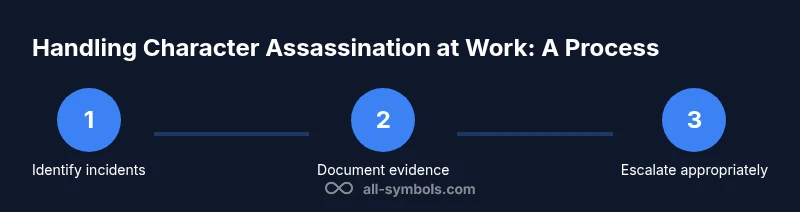
- 1
Identify safety concerns and incidents
Note what happened, who was involved, location, and any threats or harassment. Assess immediate safety risk and determine if you need to remove yourself from the situation.
Tip: If you feel in danger, leave and seek immediate help. - 2
Document with precise details
Record exact quotes, dates, times, and locations. Preserve evidence, avoid emotional language, and timestamp every entry.
Tip: Use a consistent incident log template for comparability. - 3
Set boundaries and respond calmly
Communicate boundaries in private, non-confrontational language. Use I-statements and avoid public shaming to maintain professional composure.
Tip: Prepare a short script to stay on message. - 4
Escalate through formal channels
Report to your manager and HR following policy; share evidence and request a formal review or investigation.
Tip: Follow up in writing with a concise summary of the meeting. - 5
Seek support and protect wellbeing
Request reasonable accommodations if needed; use Employee Assistance Programs; prioritize self-care.
Tip: Document any retaliation or delays in escalation. - 6
Review outcomes and adjust strategy
Evaluate the response, adjust your plan, and monitor the environment. Consider external counsel if necessary.
Tip: Update your incident log with resolution status.
Questions & Answers
What counts as character assassination at work?
Character assassination involves deliberate attempts to damage your credibility through false statements, misquoting, or spreading harmful rumors. It differs from constructive feedback, which targets behavior and outcomes with factual references.
Character assassination is when false statements are used to harm your reputation. It’s different from constructive feedback, which focuses on behavior with facts.
Should I confront the person directly?
Direct confrontation can help in some cases if it is safe and composed. Use a private setting, specific examples, and neutral language. If risk exists, prioritize documentation and formal channels instead.
Only confront if it feels safe. Otherwise, document and escalate through proper channels.
When should I involve HR or legal counsel?
Involve HR when incidents persist, escalate, or threaten your safety or career. If defamation or serious harm is involved, seek legal guidance. Always rely on your documented evidence.
Reach HR when the situation persists or risks your safety. Consider legal help for defamation concerns.
What kind of evidence is most persuasive?
Date-stamped records, direct quotes, preserved emails or messages, witness statements, and any meeting notes. Consistency and corroboration strengthen your case.
Use time-stamped records, quotes, and witness statements for solid evidence.
Can I report anonymously?
Some organizations allow anonymous reporting, but a named report often leads to a more thorough review. Check the policy and weigh safety versus thoroughness.
Anonymous reports exist in some places, but named reports may lead to stronger investigations—check policy.
Watch Video
The Essentials
- Document incidents with dates and witnesses
- Escalate through formal channels when needed
- Preserve safety and wellbeing first
- Build allies and rely on policy guidance
- Review outcomes and adjust plan