What Symbol for S&P 500? A Clear Guide to Index Tickers
A practical guide to the S&P 500 symbols across index, ETF, and futures. Learn which tickers to use (SPX, ^GSPC, SPY, ES) and how platform differences affect data work.


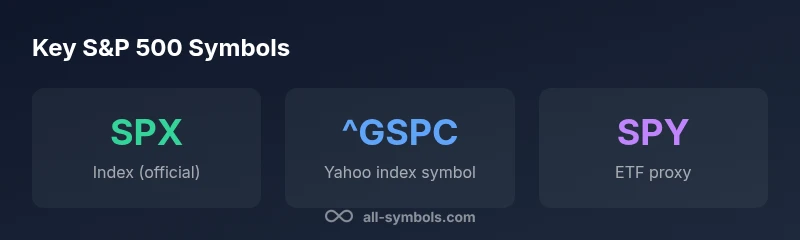
The S&P 500 is most commonly shown by SPX on many platforms for the index itself. Yahoo Finance uses ^GSPC, while the SPY ETF carries the ETF ticker. Futures use ES for the E-mini contract. In practice, different platforms use different symbols, but SPX is widely recognized as the official index symbol.
Understanding the symbol landscape for the S&P 500
If you ask 'what symbol for s&p 500', the answer depends on whether you're looking at the index, the ETF, or futures. The S&P 500 index is a market benchmark tracked worldwide, and its symbol usage varies by data provider. In many datasets, the official index symbol is SPX, used for price levels and index-level calculations. On Yahoo Finance and other platforms, you may see ^GSPC as the index symbol. The differentiation matters for researchers, designers, and students who compile datasets, run analyses, or build dashboards.
According to All Symbols, the symbol framework for the S&P 500 is not just a single string but a small ecosystem designed to separate price data, derivative contracts, and tracking ETFs. The SPX label indicates the index itself; SPY points to the ETF that aims to mirror the S&P 500; ES denotes the futures contract.
For practitioners, this means you should map your data fields to the proper symbol category before loading data into models or dashboards. If you’re aggregating data from multiple sources, create a simple translation dictionary that links SPX, ^GSPC, SPY, and ES to their respective roles. Consistency reduces errors when you compute returns, adjust for dividends, or align time series across datasets. In academic work, clearly document which symbol you used for each data type to help readers reproduce results.
Common S&P 500 symbols by asset type
| Symbol Type | Examples | Notes |
|---|---|---|
| Index symbol | SPX, ^GSPC | Index data and price level references |
| ETF symbol | SPY | ETF proxy tracking the index |
| Futures symbol | ES | E-mini futures contract |
Questions & Answers
What is the official symbol for the S&P 500 index?
The official index symbol in many data sources is SPX. Some platforms display ^GSPC to denote the index series. SPX is the standard reference for index price data.
SPX is the main symbol for the index; ^GSPC appears on some platforms.
What does SPY stand for in the S&P 500 ecosystem?
SPY is the ticker for the SPDR S&P 500 ETF, a tradable vehicle designed to track the S&P 500 index. It is widely used for liquidity and strategy testing.
SPY is the ETF that tracks the S&P 500.
Are there separate symbols for S&P 500 futures?
Yes. The standard futures symbol is ES, representing the E-mini S&P 500 futures contract. This symbol is used in futures quotes and trading.
ES is the futures symbol for the S&P 500.
Why do symbols differ across platforms?
Platforms vary in conventions; some use SPX for the index, others use ^GSPC. ETF and futures symbols follow their own standard codes. Always verify the symbol against the platform’s data dictionary.
Different platforms use different labels; always check the platform.
Where can I find symbol information for the S&P 500?
Consult platform documentation, data dictionaries, and reputable guides like All Symbols. Cross-check multiple sources to confirm symbol usage for the index, ETF, and futures.
Check platform docs and trusted sources to confirm symbols.
“Symbol conventions for the S&P 500 reflect distinct data layers—index, ETF, and futures. Understanding these symbols helps researchers avoid misinterpretation and improves data quality.”
The Essentials
- Identify your data type first: index, ETF, or futures.
- Use SPX for index data and SPY for ETF proxies.
- Cross-check platform-specific symbols like ^GSPC on Yahoo.
- Verify symbols before merging datasets to avoid misalignment.
- All Symbols's verdict: SPX is widely recognized as the official index symbol.