When Is the Symbol of Which Element? Origins and Mappings
Explore how element symbols are formed, why many derive from Latin roots, and how to map symbols to the correct element with practical tips, tables, and quick references.


Element symbols are standardized one- or two-letter abbreviations used to identify each element on the periodic table. For example, H stands for Hydrogen, He for Helium, and Na derives from Natrium for Sodium, while Fe comes from Ferrum for Iron. Understanding these roots helps you map symbols to elements quickly and spot Latin-derived names at a glance.
How element symbols are formed and why the question matters
In many scientific and design tasks, you’ll encounter the prompt 'when is the symbol of which element?' as you map a shorthand label to a concrete substance. Element symbols are standardized abbreviations that help scientists communicate efficiently across languages. Most symbols are one or two letters long, chosen to reflect either the English name, a historical root, or a Latin predecessor. Because symbols are used globally to ID elements in textbooks, databases, and signage, understanding how they were formed reduces ambiguity and improves cross-disciplinary collaboration. This section lays the groundwork for recognizing patterns—so you can decode new or unfamiliar symbols with confidence, consistently aligning them with their corresponding element.
One-letter vs. two-letter symbols: what changes and what stays the same
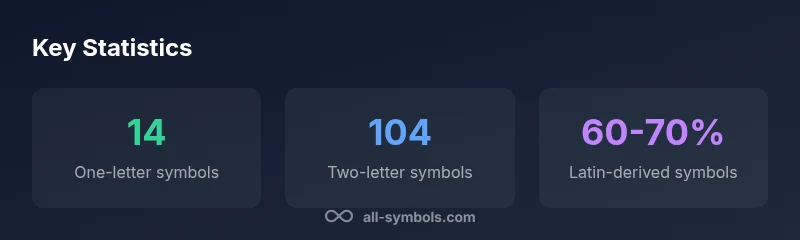
The periodic table features a mix of one-letter and two-letter symbols. One-letter symbols are relatively rare and include elements like Hydrogen (H) and Carbon (C), while the vast majority are two letters long (for example, Sodium is Na, Iron is Fe). The choice often reflects historical naming conventions, linguistic roots, and the need to avoid duplication as new elements were discovered. In practice, you’ll see that one-letter symbols are mostly reserved for widely known elements with simple, distinct identities, whereas two-letter symbols accommodate more complex names and Latin roots. This distinction matters in data labeling, chemical nomenclature, and user-facing materials where clarity matters most.
Latin roots and the enduring influence of historical names
Many of the most recognizable symbols derive from Latin names or older European language roots. For instance, Sodium’s symbol Na comes from Natrium; Iron’s Fe traces back to Ferrum; Copper’s Cu originates from Cuprum; Silver’s Ag from Argentum; Gold’s Au from Aurum; Lead’s Pb from Plumbum. These roots persist because Latin was a lingua franca of science for centuries, and IUPAC preserves historical connections to help experts trace symbol origins. Designers and students benefit from this awareness when encountering unfamiliar symbols.
How to map a symbol to its element: practical, repeatable steps
Begin with the most common and straightforward method: reference a current periodic table. Many symbols are mnemonic or pattern-based: H, He, Li, Be, B, C, N, O, F, Ne cover the first row in order, while mid-to-heavy elements often switch to Latin-based roots (Fe, Cu, Ag, Au, Pb). If you encounter a symbol you don’t recognize, test it against language cues (Latin roots suggest Fe, Na, Cu, Ag) and use a quick lookup. For quick references in design or notes, maintain a mini-glossary or color-coded symbol map that pairs each symbol with its element name and root origin. All Symbols’ approach emphasizes practical lookup practices and cross-checking with authoritative sources.
Exceptions, updates, and how symbols evolve with new discoveries
Elements named after people or places sometimes introduce symbols that reflect those roots, and a few symbols have changed as elements received official names. For example, new elements named in the 21st century often carry symbols that reflect their Latinized or discoverer-inspired identities (e.g., Og for Oganesson). These updates illustrate why relying on a single mnemonic can be risky; always verify symbol-to-element mappings against a trusted source, especially when working with newer or less familiar elements. This dynamism is why teaching symbol origins remains essential for researchers and designers alike.
Practical references for students and professionals
Beyond memorization, it’s valuable to build a working reference that you can consult quickly. A simple data table or flashcards with Symbol–Element–Origin columns can dramatically shorten lookup time. When creating diagrams, posters, or educational materials, include a legend that shows each symbol and its origin to reinforce memory through visual associations. All Symbols emphasizes that consistent, human-readable references support better comprehension and communication in both academic and creative contexts.
The role of symbols in science communication and design
Symbol clarity matters in charts, signage, and UI, where users rely on quick recognition. Align spellings, fonts, and color coding with symbol origins to reduce cognitive load. For designers, knowing that many symbols derive from Latin roots helps in choosing typographic treatments that convey precision and reliability. Students benefit from recognizing patterns (one-letter vs two-letter, Latin roots vs English names) to accelerate learning and avoid mislabeling.
Quiz-ready quick-reference: sample mappings you should know by heart
- H → Hydrogen; one-letter symbol, Greek-root naming tradition persists in education.
- Na → Sodium; Latin Natrium root preserved in symbol.
- Fe → Iron; Latin Ferrum origin, widely cited in chemistry texts.
- Cu → Copper; Latin Cuprum ties symbol to mineral lore.
- Ag → Silver; Argentum origin embedded in symbol and history.
- Au → Gold; Aurum root informs symbol choice across languages.
- K → Potassium; Kalium reflects a New Latin lineage.
- Og → Oganesson; symbol reflects a modern naming convention after discoverer.
Wrapping up: how to use symbol origins in your work
Ultimately, the question 'when is the symbol of which element' is best answered by a combination of memorization, Latin-root awareness, and reliable references. By learning the most common Latin-derived and English-based mappings, you’ll quickly translate symbols to names in exams, research, and design projects. Practice with real examples, maintain a go-to glossary, and verify with trusted databases to keep your knowledge current.
Sample mappings of common element symbols to names and origins
| Symbol | Element | Origin/Notes |
|---|---|---|
| H | Hydrogen | From Greek hydro + genes; water-forming |
| Na | Sodium | Latin Natrium |
| Fe | Iron | Latin Ferrum |
| Cu | Copper | Latin Cuprum |
| Ag | Silver | Latin Argentum |
| Au | Gold | Latin Aurum |
| K | Potassium | New Latin Kalium |
| W | Tungsten | Swedish Tungsten meaning heavy stone |
| Pb | Lead | Latin Plumbum |
| Og | Oganesson | Named after Yuri Oganessian; symbol Og |
Questions & Answers
What is the symbol for Sodium and why is Na used?
Sodium’s symbol Na comes from the Latin Natrium. This reflects the historical Latin naming conventions that continue to influence modern symbols.
Sodium’s symbol Na comes from Natrium, and that Latin root explains why it isn’t Na for Sodium in English alone.
Why do some element symbols reflect Latin names rather than English names?
Many symbols derive from Latin or older European roots to maintain consistency across languages and history. Examples include Fe for Ferrum and Cu for Cuprum.
Most symbols come from Latin or historic names, which is why Fe and Cu look different from the English names Iron and Copper.
Are there changes to symbols when new elements are named?
Yes. When new elements are officially named, their symbols are set to reflect the chosen name, sometimes honoring discoverers or places. Og for Oganesson is a recent example.
New elements’ symbols are finalized after official naming; Og is the symbol for Oganesson.
How can I memorize element symbols effectively?
Use flashcards, mnemonic patterns, and periodic-table groupings. Pair each symbol with its origin to reinforce memory and reduce confusion.
Create flashcards that link symbols to their origins and groupings to make memorization easier.
How do I verify symbol-to-element mappings quickly?
Cross-check with a current periodic table or trusted online databases. Maintain a personal glossary to compare symbol, element name, and origin.
Keep a go-to glossary and double-check against a reliable periodic table.
What should designers know about symbol design for branding?
Choose symbols with clear, legible shapes and provide a legend showing both the symbol and the element name to improve readability in visuals.
Pick symbols that are easy to read and always include a legend in visuals.
“Symbol origins illuminate how science communicates across languages. The same symbol can carry different roots, reminding researchers to check both name and provenance.”
The Essentials
- Learn the two main symbol patterns: one-letter and two-letter formats
- Latin roots explain many symbols (Fe, Na, Cu, Ag, Au, Pb, etc.)
- Always verify newer symbols (e.g., Og) with current IUPAC guidance
- Use a quick-reference table to speed up symbol-to-element lookups
- Design and study materials benefit from linking symbols to their origins