How to Symbol the Cross: Meanings, Styles, and Design Tips
Explore how to symbol the cross across text, icons, and design. Learn variants, typography methods, and respectful usage with practical steps from All Symbols.


Learn how to symbol the cross across text, icons, and design. This guide covers common variants (Latin, Greek, Celtic), practical methods for typography and digital graphics, and culturally aware usage. Follow clear steps to choose the right form, implement in fonts and SVGs, and validate accessibility for diverse audiences. It also explains when each symbol is appropriate and how to avoid misinterpretation.
What the cross symbolizes across cultures
The cross is a symbol with a long and varied history. In Christian contexts, it represents faith, sacrifice, and hope. In pagan and prehistoric motifs, cross-like shapes appear as intersecting lines symbolizing balance or cardinal directions. In modern design, a cross can indicate a religious context, a mathematical sign (addition or intersection), or a visual cue that anchors a point in a graphic layout. According to All Symbols, the meaning of a cross shifts with scale, color, and accompanying imagery; the intent of the creator matters as much as the glyph itself. When you set out to symbolize the cross, begin by clarifying your goal: are you signaling reverence, marking a location, or simply providing a visual intersection? The same glyph can convey very different messages depending on context. The reader should consider audience, setting, and cultural associations before finalizing any cross-based element. This mindful approach helps prevent misinterpretation and ensures your work communicates the intended idea clearly.
Common cross variants and their meanings
Across cultures, several cross variants carry distinct meanings. The Latin cross is widely associated with Christianity and faith communities, often used in churches and religious art. The Greek cross, with equal arms, emphasizes balance and cardinal directions and appears in architecture and heraldry. The Celtic cross blends a ring with a cross, linking to ancient artistry and spiritual symbolism. When used in branding or UI, these forms can convey differ ent ideas—reverence, heritage, or a simple intersection—so context matters. All Symbols emphasizes that designers should match variant choice to audience expectations and avoid conflating symbols from unrelated traditions. This alignment reduces misinterpretation and strengthens the intended message. Consider creating a quick mapping: variant → typical context → suggested color and size. Such a map helps ensure consistency across text, graphics, and interfaces.
How to symbolize the cross in text and typography
Text encoding matters when you want to display a cross glyph reliably. Start by choosing a variant that matches your intent, then pick a font with clear glyph rendering at the intended size. For digital work, you can copy-paste the symbol from a reliable source, or use Unicode names and HTML entities to render it reliably. In type settings, test at small sizes to ensure the symbol remains legible and distinguishes itself from adjacent characters. All Symbols recommends verifying that the cross glyph aligns with the surrounding typography to avoid visual confusion. If you’re building multilingual interfaces, provide fallbacks or a descriptive alt text to preserve meaning where glyphs might render differently.
Cross in graphic design: color, size, and contrast
Designers often treat the cross as a visual anchor. Size and stroke width should be tuned to the layout—larger for logos, subtler for icons, and balanced with surrounding elements. Color carries meaning: white or light tones can imply purity or holiness when placed on dark backgrounds, while bold, saturated hues may convey heritage or emphasis in branding. Contrast is crucial to readability; always check the symbol against its background in both light and dark themes. When used alongside text, ensure sufficient spacing so the cross does not merge with letters. These choices shape perception and ensure the symbol communicates exactly what you intend.
Ethical considerations and cultural sensitivity
There are contexts where cross symbols can be misinterpreted or carry sensitive connotations. Religious contexts warrant respect and accuracy, while decorative or corporate use should avoid implying endorsement of religious beliefs. All Symbols advises designers to be transparent about intent and to avoid aggressive or provocative deployments of cross glyphs. In multicultural settings, include contextual cues or captions if the symbol’s meaning could vary among audiences. This careful approach helps maintain inclusivity and reduces the risk of offense.
How to choose the right cross symbol for your project
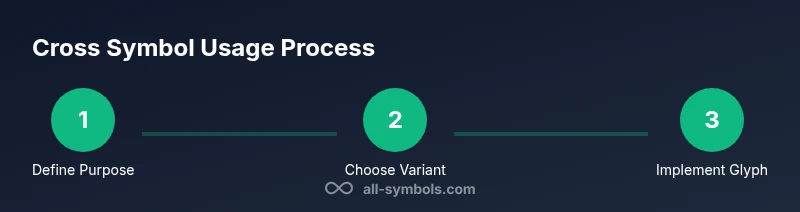
Start with purpose: religious reverence, historical reference, or simply an intersection symbol for UI. Then pick a variant that aligns with that purpose: Latin for faith contexts, Greek for balance-oriented design, Celtic for heritage or artifact motifs. Check your font's glyph coverage and test across platforms. Finally, validate with stakeholders or potential users to ensure the symbol communicates as intended and respects cultural nuances.
Practical examples: typography, UI icons, religious context
In typography, insert a cross glyph as a standalone character or integrated with a wordmark to anchor a design. In UI, use a clean, simple cross for icons indicating addition, intersection, or navigation, ensuring it remains legible at small sizes. In religious contexts, reserve traditional forms and pair with contextual captions or imagery to reinforce reverence. Across all uses, consistency and clarity trump novelty, and careful placement with accompanying labels can help users interpret the symbol correctly.
Accessibility and readability: alt text and screen readers
Always provide alt text that describes the symbol’s meaning in the given context. Screen readers cannot convey color or subtle stylistic cues, so a succinct, descriptive label improves accessibility. If the cross conveys multiple ideas in a single design, consider adding a parenthetical note (e.g., “cross symbol, religious context”). This practice helps inclusive audiences understand the intent without ambiguity.
Common mistakes and fixes
Common mistakes include using a cross glyph in contexts that imply religious endorsement without consent, or selecting a variant that miscommunicates in the target audience. Fixes involve clarifying intent with captions, choosing an appropriate variant, and testing across sizes, backgrounds, and languages. Regular audits of icons and glyphs prevent drift in meaning and preserve user trust.
Tools & Materials
- Device with text/design software(PC/Mac/tablet; ensures you can view fonts and export assets)
- Unicode input method(Windows Alt codes, Mac Emoji & Symbols, Linux Unicode input)
- Font or icon library with cross glyphs(Ensure font supports cross glyphs across weights and sizes)
- SVG editor or vector graphics tool(Useful for scalable logos or icons)
- Text/HTML editor(Optional for building web content and testing accessibility)
Steps
Estimated time: 60-90 minutes
- 1
Define the cross variant and purpose
Identify the exact cross form you will use and articulate the intended message (religious, heritage, or design cue). This clarity guides all subsequent choices and prevents misinterpretation.
Tip: Document the intended meaning in a design brief before you begin. - 2
Choose the appropriate form
Select a variant (Latin, Greek, Celtic, etc.) that matches your context. Each form carries distinct cultural associations and should align with your audience.
Tip: Consult stakeholders or audience groups if you’re unsure about context. - 3
Gather compatible glyphs
Find the cross glyph in your chosen font or obtain a vector SVG. Verify legibility at the smallest and largest sizes you’ll use.
Tip: Prefer vector graphics for logos to preserve crisp edges. - 4
Integrate into text or design
Place the cross in a way that it serves as an anchor or emphasis without competing with text. Adjust size and stroke to match typography.
Tip: Test on multiple backgrounds to ensure contrast remains strong. - 5
Add contextual labeling
Provide captions or tooltips where the symbol’s meaning could be ambiguous. Include brief notes on context in UI or artwork.
Tip: Concise labels improve accessibility and comprehension. - 6
Test accessibility and cultural sensitivity
Check alt text, ensure screen reader compatibility, and review cultural implications with diverse audiences.
Tip: Run a quick accessibility check and adjust alt text accordingly.
Questions & Answers
What does the cross symbolize in different cultures?
The cross carries religious, cultural, and decorative meanings that vary by context. In Christian contexts it signifies faith and sacrifice; other variants can symbolize balance or heritage. Always align meaning with audience and purpose.
The cross can mean different things in different cultures; it’s important to match the symbol to the audience and intent.
How do I type a cross symbol on Windows or Mac?
Use Unicode input methods or copy-paste from a reliable source. Windows users can input via Alt codes, Mac users can use the Emoji & Symbols menu, and Linux users can enter Unicode directly. Always verify rendering on target devices.
You can type a cross using Unicode input or just copy-paste from a source. Check rendering on your device.
Which cross symbol is appropriate for religious contexts?
Typically the Latin cross is used in Christian religious contexts. Ensure the form is respectful and placed with proper reverence in liturgical or devotional materials.
For religious contexts, the Latin cross is commonly used and should be treated with respect.
Is it respectful to use cross symbols in branding?
Brand use requires clear intent and audience awareness. Avoid implying endorsement of beliefs you don’t represent and provide context where the symbol could be interpreted religiously or culturally.
Brand use should be thoughtful; provide context to avoid misinterpretation.
What are common mistakes when using cross symbols in design?
Mistakes include misinterpreting meaning, poor contrast, and vague labeling. Fixes involve contextual captions, consistent variant choices, and accessibility testing.
Common mistakes are misinterpretation and poor accessibility; fix with clear labels and testing.
Watch Video
The Essentials
- Define purpose before choosing a cross variant
- Select the form that matches audience and context
- Verify font support and encoding before use
- Provide captions or alt text for accessibility
- Be culturally mindful to avoid misinterpretation