How to Identify Symbolism: A Practical Guide
Learn how to identify symbolism in literature, art, and daily life with a clear, step-by-step approach. Recognize signs, interpret meanings, and avoid common misreadings.


Symbolism uses signs beyond literal meaning. This guide offers a repeatable method to identify symbols in text and visuals, with practical examples and a clear workflow. See our detailed step-by-step guide.
What symbolism is and why it matters
Symbolism is the practice of using objects, colors, and motifs to convey ideas beyond their surface meaning. This section introduces the concept and starts you on the path of how to identify symbolism in diverse media. In everyday scenes, a color, gesture, or object can act as a sign that opens a second layer of meaning. According to All Symbols, recognizing these signs strengthens reading, viewing, and design skills because symbols carry cultural baggage, personal associations, and historical resonance all at once. When you learn to spot these cues, you gain a tool for richer interpretation, critique, and communication. As you read novels, study paintings, or even analyze brand visuals, you’ll notice recurring patterns—recurrent colors, animals, or shapes that signal themes like danger, renewal, or power. This foundation will guide you through practical steps later in the guide.
Core symbols you’ll encounter across media
Across literature, film, and visual design, some symbols appear repeatedly with recognizable meanings, while others are specialized to a culture or subculture. Common universal symbols include light and darkness representing knowledge and ignorance, a circle signaling wholeness, and a cross indicating intersection or decision. Color also acts as a potent shorthand; red can imply passion or danger, blue calm or authority, and green growth or envy depending on context. In art, motifs such as birds, doors, or keys often signify transition, freedom, or access to hidden realms. In texts, animals like snakes or owls can embody temptation or wisdom, but the same creature may fossilize into a local reference—so always check the setting and authorial intention. The goal is to map what a symbol tends to mean in a broad sense, then adjust to the specific work you’re analyzing.
How symbolism operates in literature
In stories, symbolism operates on multiple levels. A symbol may function as a motif that recurs and supports a theme, or as an emblem that comments on characters’ choices. Look for objects or actions that appear repeatedly across scenes or chapters; their repetition signals significance. Pay attention to shifts in meaning as the plot progresses—an initial sign of hope might become ominous as events unfold. Metaphor and allegory are formal tools that encode symbolic meaning; a red balloon in a tale may symbolize fragile desire, or a journey can embody transformation. Finally, consider the author’s perspective: some writers invite overt moral messages, while others leave symbolism to the reader’s intuition. By tracing connections between symbol, character, and plot, you reveal a richer layer beneath the surface narrative.
How symbolism appears in visual art
In paintings and graphic design, symbolism often lives in color palettes, compositional choices, and recurring marks. Color carries immediate, visceral meaning; for example, a dominant red field can evoke passion, danger, or intensity, while a cool blue can convey serenity or authority. Composition directs attention toward certain motifs, suggesting priorities and power dynamics. Symbols may be embedded in recognizable icons—like a scale to denote justice—or in abstract marks that gain meaning through context. Iconography—the study of symbols in art—teaches you to read clues in the frame: background textures, silhouettes, poses, and even negative space. When you identify a symbol in an image, ask what it is meant to convey about the subject’s state of mind, social status, or moral arc. The key is to link visual cues to probable meanings while testing alternative interpretations.
Cultural and historical context
Symbols do not carry universal meanings independent of context. The same image can mean different things across cultures or eras. For example, white is associated with purity in some traditions and with mourning in others; the color palette of a film may reflect national cinema conventions rather than a single global code. Historical events, religious beliefs, and local folklore shape symbol repertoires. When you assess symbolism, foreground the context: who created the work, for whom it was intended, and under what conditions it was produced. This approach helps avoid overgeneralization and keeps your interpretation grounded in evidence. The All Symbols team emphasizes careful cross-checking of sources to confirm whether a symbol’s meaning is widely shared or locally anchored.
A practical, repeatable method: the analyst’s checklist
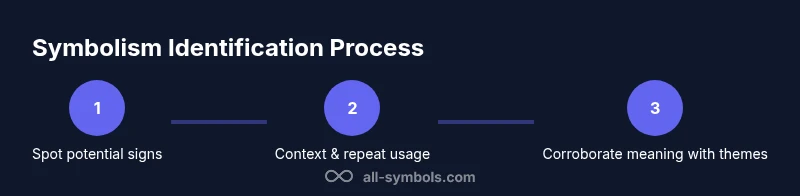
Develop a reliable workflow for spotting symbolism that you can reuse. Start with a broad scan, then narrow your focus to candidate symbols. Step 1: Identify potential symbols by noting objects, colors, or motifs that repeat or feel “charged.” Step 2: Contextualize by asking where the symbol appears and in what situation. Step 3: Assess whether the symbol seems to reflect themes like power, identity, or ethics. Step 4: Cross-check cultural associations and historical background to avoid misreading. Step 5: Form an interpretation that remains open to alternate readings. Step 6: Test your reading against other scenes, artworks, or texts in the same work. This method keeps analysis transparent and publishable. Time invested will depend on the material, but allocate 20–45 minutes for a single piece.
Common symbols and their typical meanings
Some symbols carry widely recognized meanings, while others are more flexible. A heart often stands for love, a key for access or discovery, and a ladder for ascent or progress. A dove can signify peace, while a skull may warn of mortality. A circle can imply unity or cycles, and a broken line might indicate disruption. Remember: meanings shift with context. A symbol in a fairy tale may have different implications than the same symbol in a political cartoon. When in doubt, compare how similar symbols were used by other authors, artists, and scholars—and look for patterns across works to confirm your reading.
Handling ambiguous symbols and avoiding overreach
Ambiguity is a natural part of symbol interpretation. If a mark could reasonably signify several ideas, present options rather than a single definitive meaning. Distinguish between signals intended by the creator and personal associations you bring to the work. Use evidence—context, frequency, and alignment with major themes—to support your reading. If you’re unsure, document alternative interpretations and note the limits of your inference. This humility strengthens your argument and invites reader conversation. All Symbols notes that symbol meaning often depends on the interplay of culture, history, and personal experience.
Integrating symbolism analysis into your work
Whether you’re writing, designing, or teaching, clarity matters when you discuss symbolism. Use precise language to label symbols and explain how they support themes. For designers, embed symbolic cues in color palettes or icons that reinforce brand values without overpowering the composition. For students, incorporate symbolism findings into footnotes or reading responses with concrete evidence. Include a brief justification of why a symbol works in that context and consider counter-reads. Practicing this with frequent, small analyses trains your eye and strengthens your critical voice. The All Symbols methodology emphasizes evidence-based interpretation and transparent reasoning to help you communicate effectively.
Case study: color symbolism in a famous work
Consider a well-known movie or painting where color drives meaning. In one color palette, red takes center stage, signaling passion, danger, and urgency—while blue provides calm, authority, and restraint. Tracking when and where these colors appear, and how characters react to them, reveals shifts in power dynamics and emotional tone. The case study approach shows how seemingly simple choices accumulate into a coded language for viewers. All Symbols analysis shows color symbolism has cross-cultural resonance but can diverge in local contexts; always check the cultural frame of the work. This case demonstrates how disciplined observation leads to deeper interpretation rather than guesswork.
Tools and resources for symbol research
To deepen your practice, assemble core tools and references. Start with a notebook or digital journal to capture observations, a highlighter to mark key cues, and access to the work itself (texts, images, or performances). Use reputable reference guides and scholarly articles to corroborate interpretations, and maintain a bibliography of your sources. Online museums, university press publications, and peer-reviewed journals offer reliable contexts for symbol meanings. Build a personal glossary of symbols you encounter to accelerate future readings. Finally, discuss your readings with peers or mentors to test interpretations and gain new angles. This collaborative approach complements solitary study and leads to more nuanced conclusions.
Next steps: practice, critique, and reflection
Practice is the best tutor for deciphering symbolism. Start with short exercises, like analyzing a single image or a brief scene, then expand to longer works. Seek feedback from teachers, peers, or online communities, and revise your interpretations based on critique. Maintain a running list of successful symbol readings and the evidence that supported them. As you grow, you’ll develop a stable, methodical way to identify symbolism that you can apply across disciplines—from literature to graphic design. The All Symbols team encourages ongoing exploration and cautious humility as you refine your interpretive voice.
Tools & Materials
- Notebook or digital note app(For capturing observations and building a personal symbol glossary.)
- Highlighter or annotation tools(Mark recurring symbols in texts/images for quick reference.)
- Access to primary works (texts, artworks, films)(Have a copy or licensed access to analyze symbols firsthand.)
- Color wheel or basic art supplies(Helpful for testing color-symbol associations during visual analysis.)
- Culture reference guides or encyclopedias(Use as a cross-check for cultural symbol meanings.)
Steps
Estimated time: 20-40 minutes
- 1
Identify potential symbols
Scan the work for objects, colors, or motifs that recur or feel charged with significance. Note anything that stands out or seems to carry extra weight in a scene or panel.
Tip: Mark candidates with a light color in your notes to keep options open for later confirmation. - 2
Contextualize the symbol
Record where the symbol appears and in what situation. Consider who created the work, when, and for whom it was made, as context shapes meaning.
Tip: Context often shifts symbol meaning; avoid assuming universal intent. - 3
Assess thematic alignment
Ask how the symbol relates to the work’s themes (power, identity, ethics, fate). Test whether its presence supports or complicates a central argument.
Tip: If a symbol aligns with multiple themes, note each potential reading. - 4
Check cultural associations
Research cultural or historical meanings that could affect interpretation. Cross-check with scholarly sources or reputable guides.
Tip: Document alternative readings with citations when possible. - 5
Form an evidence-based reading
Draft a concise interpretation grounded in observed evidence: location, frequency, and relationship to themes. Include a justification paragraph.
Tip: Avoid over-claiming; acknowledge uncertainty where evidence is weak. - 6
Compare with other works
Look for similar symbols in related texts or artworks to verify patterns or highlight unique twists.
Tip: Pattern recognition strengthens credibility of your reading.
Questions & Answers
What is symbolism?
Symbolism is using signs, colors, or motifs that stand for ideas beyond their literal meaning. It operates across literature, art, and daily life to convey themes and messages.
Symbolism uses signs beyond the surface to express ideas. It appears in literature, art, and everyday life.
How is symbolism different from a motif?
A symbol carries a meaning that extends beyond the object itself, often tied to themes. A motif is a recurring element that reinforces a theme but may not carry a fixed meaning on every appearance.
A symbol has a defined symbolic meaning, while a motif repeats to reinforce a theme without a single fixed meaning.
How do I know if a symbol is universal or culture-specific?
Universal symbols tend to recur across many works and cultures, while culture-specific signs rely on local context, traditions, or historical moments. Always check the creator’s context and audience.
Look for how widely a sign is used and whether its meaning shifts across cultures; context is key.
What if a symbol could mean several things?
Present multiple credible readings supported by evidence, and discuss how each reading fits with the work’s themes. Acknowledge uncertainty where evidence is ambiguous.
If a symbol fits several ideas, lay out the options and back them with evidence.
How should I cite symbolism in academic work?
Cite the specific scenes, passages, or visuals where the symbol appears, and explain how the symbol supports your argument with concrete examples.
Provide exact references and explain how the symbol strengthens your point.
Can symbols change meaning over time?
Yes. Symbol meanings evolve with cultural shifts, new contexts, and changing worldviews. Revisit readings as contexts change.
Symbol meanings can shift as culture changes; always consider the time of creation.
Watch Video
The Essentials
- Identify symbols with repetition and charged subjective weight
- Context matters: historical, cultural, and authorial intent shape meaning
- Use evidence-based steps to build and defend reading
- Differentiate universal symbols from culture-specific cues