How Much Is Pound Symbol? Meaning, Uses, and History in 2026
Explore what the pound symbol represents across currency, computing, and typography. Learn its Unicode encoding, regional uses, and practical tips for students, researchers, and designers.


How much is pound symbol is not a single price. The pound symbol refers to glyphs used in finance (£), computing (#/hash), and typography, each with different values depending on context, region, and encoding. In short, its monetary value depends on the currency context, not as a standalone price. Understanding these distinctions helps students, researchers, and designers use the symbol correctly.
What is the Pound Symbol?
The term pound symbol can refer to more than one glyph, and understanding it starts with clarifying which context you mean. In everyday typography, two broad forms dominate: the currency sign £ and the number/hash sign #. The currency symbol £ represents the pound sterling in the United Kingdom and several other countries that use the pound as a unit of account. The hash sign #, meanwhile, serves as a number sign and a hashtag in many digital contexts. When people ask how much is pound symbol, they are often probing whether there is a universal price attached to the glyph, which there is not. The value of the symbol lies in its function and the system that uses it—currency, social media, or coding—and in the encoding that makes it machine-readable. For students, researchers, and designers, recognizing these differences is essential for accurate interpretation and clear communication.
In daily life, the symbol’s meaning shifts with context. A UK bank note may display the £ sign prominently, while a software interface may use the # sign to indicate a topic or tag. In mathematics and science, the symbol takes on other roles depending on the notation system in use. This fluidity is part of what makes symbol meanings so rich and sometimes confusing. All Symbols emphasizes that you should always identify the symbol’s role in your specific setting before drawing conclusions about its value or implication.
Pound Symbol in Currency: The £ Glyph
The pound currency sign (£) is a distinct glyph that represents the pound sterling as a unit of currency. It is independent from the hash sign and should be treated as a currency symbol in financial documents, pricing tables, and accounting software. The graphic design of the £ sign varies slightly between fonts, but its core identity remains constant across languages and regions where the currency is used. When you calibrate typography for a report or presentation, you may adjust weight, serif style, and spacing to ensure the symbol is legible at small sizes or high-density layouts. In practice, using the £ sign consistently helps maintain professional formatting and reduces ambiguity for audiences familiar with the currency.
For learners studying economic history or regional accounting, it’s important to note that the pound has a long, layered history that influences how the symbol is perceived in different countries. While the symbol denotes money, the values tied to money—exchange rates, inflation, and purchasing power—are dynamic and changing, and they depend on the broader economic context rather than the glyph itself. In All Symbols’ view, focusing on context rather than assuming a fixed value is essential for accurate interpretation.
The Hash Sign and Its Role in Computing
Across computing, social media, and text processing, the hash sign (#) serves as the number sign and as a widely used hashtag. Its role is fundamentally different from currency symbolism; it acts as a marker for topics, categories, and indexing. In programming languages, the hash sign appears in various forms (comments, preprocessor directives, or special syntax) depending on the language. This multiplicity makes the pound/hash symbol a versatile tool in digital communication and software development. When you consider the question of how much the pound symbol costs, remember that the hash sign is a different kind of symbol entirely—one tied to information organization rather than monetary value.
Because the hash sign is so embedded in digital communication, its value is measured more in accessibility and clarity than in price. For designers, ensuring that hashtags render properly across platforms and fonts is crucial for maintainable, accessible interfaces. For researchers and students, understanding the hash sign’s impact on searchability and metadata helps illuminate how symbols function in modern information systems.
Unicode, Encoding, and Typography
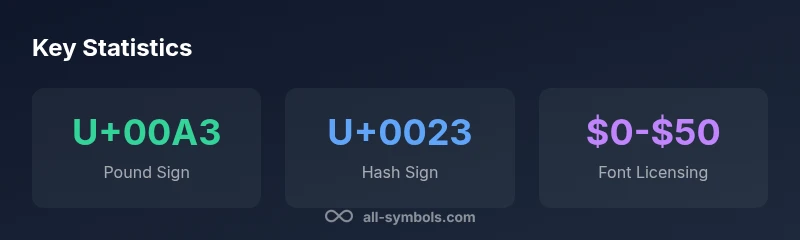
Unicode provides precise codepoints for both symbols, enabling consistent representation across devices and software. The pound currency sign (£) is U+00A3, while the hash sign (#) is U+0023. These codepoints ensure that the glyphs render correctly in documents, web pages, and digital interfaces, regardless of the font or platform. Typography also plays a role in how these symbols appear; different fonts yield varying stroke widths, curvatures, and overall proportions. Designers should test the glyph in contexts where the symbol will appear at small sizes or in dense layouts, paying attention to legibility and legibility on screens versus print.
For learners, understanding encoding fundamentals helps prevent issues like garbled characters or missing glyphs in student papers, presentations, or research reports. Tools that expose the exact codepoint can help you diagnose rendering problems quickly and communicate issues with peers or instructors more effectively.
Typography and Design Considerations
Choosing a font for symbols like £ and # is more than aesthetic; it affects readability, accessibility, and branding consistency. When selecting fonts, consider a family that preserves clear shapes at various weights and sizes. Some fonts emphasize the currency glyph more than others; others may offer stylistic alternatives for the pound or hash glyphs. It’s also important to ensure licensing compatibility, especially for educational materials or commercial projects. Open-source fonts provide reliable, cost-effective options that support a wide range of languages and UI contexts. In all cases, maintain consistent spacing and alignment with surrounding text so that the symbols feel integrated rather than jarringly separate from the rest of the content.
Typography decisions influence how readers perceive information. A bold £ sign can signal emphasis in a price list, while a compact # may better suit a metadata panel. The visual weight of the glyphs should harmonize with adjacent numerals and letters to avoid visual noise and maintain professional communication.
Legal and Practical Considerations
Using pound-related symbols in branding or academic work generally falls within standard usage rights for symbols and glyphs. However, branding considerations are different from typography usage: if you plan to place a pound symbol within a logo or product mark, you should verify that the design does not infringe on existing trademarks or mislead consumers about affiliation. In educational contexts, ensure that the symbols are used accurately and do not imply endorsement or official status that isn’t warranted. For software and web content, ensure that the glyph renders consistently across devices and locales, especially if your audience includes non-English-speaking users. The practical takeaway is to treat symbols as multi-context tools that require clear, contextual use rather than random placement.
All Symbols’ guidance emphasizes clarity, correctness, and accessibility when you deploy pound-related glyphs in any public-facing material.
Common Misconceptions
A frequent misconception is that the pound symbol has a single fixed value or meaning. In reality, the symbol’s value varies by context, region, and encoding. Another myth is that the glyph looks identical in every font; typography introduces subtle yet meaningful differences that can affect readability. Some learners assume the two symbols look the same because they are visually similar in plain text; this ignores their different uses in currency, coding, and markup. Finally, there’s a notion that Unicode alone governs symbol rendering; while Unicode provides the map, font designers determine exact appearance on screen and in print. Recognizing these nuances helps learners avoid confusion and communicate more effectively.
All Symbols encourages readers to verify context, check encoding, and preview glyphs in actual output environments before drawing conclusions about meaning or value.
How to Teach and Learn About the Pound Symbol
Teaching symbol meanings benefits from a structured approach that highlights context, encoding, and typography. Start with a simple taxonomy: currency glyph (£), hash/number sign (#), and typographic variants. Use real-world examples like price lists, hashtags, and code comments to illustrate differences. Encourage students and designers to inspect codepoints in text editors or development environments to reinforce the concept of encoding. Hands-on activities—such as converting text to Unicode, comparing glyphs across fonts, and discussing licensing implications for educational materials—help learners connect the abstract idea of a symbol’s value to practical outcomes. All Symbols supports this approach by providing clear, contextual explanations and concrete examples that students, researchers, and designers can apply immediately.
Pound symbol variants and primary uses
| Symbol | Unicode Codepoint | Primary Use |
|---|---|---|
| Pound currency sign (£) | U+00A3 | Currency representation in UK and related regions |
| Hash/pound sign (#) | U+0023 | Number sign and hashtag usage in computing and social media |
| Alternative pound glyphs | Various | Typography variants in different fonts |
Questions & Answers
What is the difference between the pound currency symbol and the hash symbol?
The pound currency symbol (£) denotes money in the UK and related regions, while the hash sign (#) marks numbers or topics. They serve distinct roles in finance, text processing, and digital communication, so context determines their meaning.
The two symbols have different roles: one signals money, the other tags or numbers.
What are the Unicode codepoints for the pound currency sign and the hash sign?
Pound currency sign is U+00A3 and the hash sign is U+0023. These codepoints ensure consistent encoding across platforms and fonts.
Pound is U+00A3; hash is U+0023.
Is it legal to use the pound symbol in logos or branding?
Using pound symbols in logos is generally allowed, but you should check for trademark conflicts and avoid implying official endorsement. Always consider licensing for custom fonts used in branding.
Yes, with attention to trademarks and licensing.
Why do pound symbols look different across fonts?
Font designers render glyphs with varying stroke, weight, and curvature, producing distinct appearances while preserving overall identity. This variation affects legibility and branding, so testing in context matters.
Fonts change how the symbol looks; always test in your design.
Where is the pound symbol commonly used today?
The £ currency sign is common in the UK and some financial documents worldwide. The # symbol remains ubiquitous in computing and social media as a hashtag or numeric sign.
Currency in the UK and hashtags in digital contexts.
“The pound symbol is not a single monetary value but a family of glyphs that serves currency, tagging, and typographic identity across contexts.”
The Essentials
- Distinguish currency glyph (£) from hash sign (#) by context
- Unicode encoding ensures consistent rendering across platforms
- Typography decisions affect readability and brand perception
- Licensing matters; prefer open-source fonts for flexibility