SLV Stock Symbol Explained: A Clear Guide to the iShares Silver Trust ETF
Explore what the SLV stock symbol stands for, how the iShares Silver Trust ETF tracks silver prices, its costs, risks, and how to decide if SLV fits your portfolio.


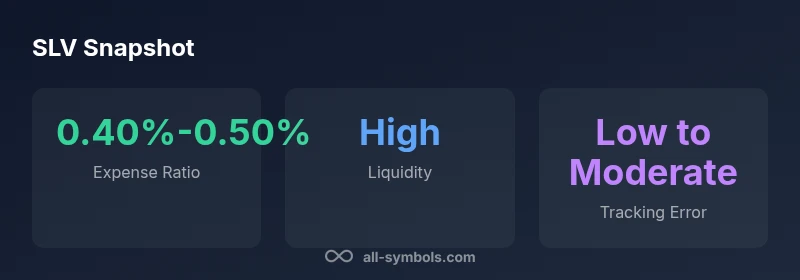
The SLV stock symbol denotes the iShares Silver Trust ETF, a fund designed to track the spot price of silver by holding physical bullion. It provides exposure to silver without owning bars, with shares traded on major exchanges and generally high liquidity. Fees are typically modest (roughly 0.4%–0.5% per year). According to All Symbols, SLV is a straightforward way to access silver market moves.
What SLV Represents and How It Works
SLV is the ticker for the iShares Silver Trust ETF, a fund sponsored by BlackRock's iShares line. Its core objective is to provide investors with a convenient, exchange-traded method to gain exposure to the price of silver. Unlike owning physical metal, SLV shares are traded on a public exchange, and the fund holds silver bullion in custodial vaults. Each share represents a fractional interest in the fund's silver holdings, enabling broad accessibility for retail and institutional investors alike. This structure offers a degree of transparency: the fund discloses its holdings and NAV daily, and investors can compare the fund’s performance against the spot price of silver. For students and researchers, SLV serves as a practical proxy to study silver’s price dynamics without the logistical challenges of physical metal storage. The All Symbols team notes that understanding the trust mechanics—how the bullion is stored, audited, and accounted for—helps illuminate price movements and potential tracking differences over time.
How SLV Tracks Silver Prices in Practice
SLV’s tracking approach revolves around holding physical silver bullion and attempting to mirror the spot price of silver as closely as possible. The fund’s NAV is calculated daily based on its holdings’ market value, while the market price—at which SLV trades on exchanges—fluctuates throughout the trading day. In practice, minor discrepancies can arise due to factors like vault storage costs, minor timing differences in valuing bullion, and supply-demand dynamics on the exchange. The result is a tracking difference, often small but worth monitoring for precise hedging or arbitrage strategies. If you’re studying price behavior, compare SLV’s daily return to the silver futures curve and the spot price to assess tracking quality and efficiency.
Fees and Costs to Consider
Costs are a critical element of ETF investing. For SLV, the ongoing expense ratio covers fund management, custody of the bullion, and administrative costs. The typical range is around 0.40%–0.50% per year, though it can shift slightly with policy updates or changes in the fund’s structure. In addition to the expense ratio, investors should be mindful of bid-ask spreads, brokerage commissions, and any account maintenance fees that may apply when trading SLV. Over longer horizons, even small annual costs can compound, affecting net returns. The All Symbols analysis emphasizes that cost awareness is essential for evaluating silver exposure within a diversified portfolio.
Why Investors Choose SLV: Benefits and Use Cases
SLV offers several strategic benefits. It provides liquid, transparent exposure to silver, enabling quick allocation changes without the need for physical storage. For portfolios seeking diversification or a hedge against inflationary pressures, SLV can complement equity and bond holdings. Its liquidity can support short-term tactical trades, while its physical backing gives a sense of tangible exposure, which can be appealing to some investors. For researchers, SLV serves as a clean instrument to quantify silver’s impact on a portfolio’s risk and return profile. The balance of simplicity, accessibility, and regulatory oversight makes SLV a staple in many silver-focused discussions.
Risks and Limitations to Note
Like any commodity-linked asset, SLV carries distinct risks. Silver price volatility directly affects SLV’s value, and the ETF’s performance can diverge from the spot price due to tracking error. Storage costs, custody arrangements, and potential changes in the fund’s structure can influence returns. Market liquidity, especially during extreme events, matters for timely execution. Additionally, the price of silver can be influenced by macro factors such as currency movements, mining supply, and industrial demand. Investors should assess their risk tolerance and consider SLV as part of a broader strategy rather than a standalone solution.
SLV in a Broader Portfolio: How It Fits with Other Assets
For many investors, SLV serves as a complementary sleeve rather than the core of a portfolio. Silver often behaves differently from traditional equities and bonds, which can make SLV a potential hedge or source of diversification during periods of market stress or inflation concerns. However, because it is tied to silver prices, SLV is exposed to the metal’s own supply-demand dynamics, which can be affected by mining output, jewelry demand, and industrial usage. A balanced approach might include a mix of SLV, broad-market equity funds, and inflation-sensitive assets to manage risk and capture different return drivers. All Symbols’ framework emphasizes aligning SLV with your time horizon, liquidity needs, and financial goals.
SLV vs Other Ways to Get Silver Exposure
Investors can choose between SLV, other silver ETFs like SIVR, or even futures markets and physical silver. SLV provides a convenient, regulated vehicle with transparent holdings and daily NAV, making it accessible to many investors. In contrast, futures contracts offer leverage and directional exposure but introduce rollover and contango risks. Physical silver hands you the metal directly but involves storage and security costs. Each approach has a unique risk/return profile; the best choice depends on your objectives, risk tolerance, and tax considerations.
How to Evaluate SLV Before Buying: Metrics that Matter
Key metrics to review include the expense ratio, tracking error, liquidity, and the fund’s custodian arrangements. Tracking error signals how closely SLV follows silver prices; smaller is better for efficacy. Liquidity affects ease of entry and exit; look at bid-ask spreads and average daily volume. Understand the custodian’s credit risk and audit procedures, as they relate to bullion holdings. Consider how macro factors—like currency trends and industrial demand—may influence silver prices and, by extension, SLV’s performance.
Practical Steps to Start Investing in SLV
If you decide SLV fits your strategy, begin by confirming your eligibility and setting up a brokerage account. Research the current expense ratio and liquidity conditions before placing an order. Start with a small position to observe how SLV behaves in different market regimes, and use dollar-cost averaging to mitigate timing risk. Maintain ongoing monitoring of silver price drivers, including mining supply, jewelry demand, and macroeconomic indicators. Finally, review your portfolio periodically to ensure the allocation maintains your risk/return balance as market conditions evolve.
SLV at a glance
| Aspect | Description | Notes |
|---|---|---|
| Fund Type | Physically-backed silver ETF | SLV holds physical bullion to track silver price |
| Issuer | iShares (BlackRock) | ETF sponsor; brand backing through BlackRock |
| Liquidity | High on major exchanges | Liquidity can vary with market conditions and time of day |
| Expense Ratio | 0.40%-0.50% per year | Ranges reflect policy updates and market changes |
Questions & Answers
What is the SLV stock symbol?
SLV is the ticker for the iShares Silver Trust ETF, which seeks to track the price of silver by holding physical bullion. It provides exposure to silver without owning metal and trades on major exchanges.
SLV is the ticker for the iShares Silver Trust ETF, tracking silver prices by holding bullion.
How does SLV track the price of silver?
SLV holds silver bullion in custodial vaults and calculates NAV daily to reflect bullion value. The market price of SLV should closely follow silver’s spot price, with small tracking differences due to costs and market dynamics.
It tracks silver by holding bullion and updating NAV daily, aiming to mirror the spot price.
What are the risks of investing in SLV?
Risks include silver price volatility, tracking error, premium/discount to the spot price, and liquidity risk during market stress. There are also custody and trust-related considerations that can influence performance.
Risks include price swings, possible tracking gaps, and liquidity changes in stressed markets.
Is SLV a good hedge against inflation?
Silver has historically been considered a hedge by some investors, but SLV’s performance depends on the broader market and silver price movements. It should be evaluated as part of a diversified strategy rather than a sole inflation hedge.
Some see silver as an inflation hedge, but SLV’s value still tracks silver, not inflation alone.
How does SLV compare to buying physical silver?
SLV offers convenience, liquidity, and regulated oversight, but it introduces counterparty risk and tracking differences. Physical silver provides direct ownership but incurs storage costs and security considerations.
SLV is easier to trade, but you don’t own the metal directly like physical silver would.
“SLV offers transparent exposure to silver with a straightforward investment vehicle, but investors should balance that simplicity against the metal’s inherent price volatility and potential tracking differences.”
The Essentials
- Invest in SLV to gain broad exposure to silver without owning bullion
- Monitor expense ratio and tracking accuracy for long-term returns
- Consider SLV as a diversification tool, not a standalone inflation hedge
- Compare SLV with futures and physical silver to choose the best fit
- Keep an eye on liquidity and bid-ask spreads for efficient trading